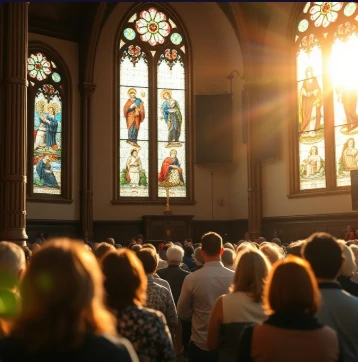
Religion is an organized system of beliefs, practices, and worship. It typically involves a community, sacred texts, rituals, and moral codes. It addresses ultimate questions: Why are we here? What happens after death? How should we live? Not all religions involve a god or gods. Buddhism and Confucianism are often described as religions or ethical systems.
Sociologists study religion as a social institution. Émile Durkheim argued that religion reinforces social solidarity by separating the sacred from the profane. Max Weber showed how Protestant ethics shaped capitalism. Karl Marx called religion the opium of the people, a comfort that dulls revolutionary consciousness.
Functions of religion
- Provides meaning and purpose
- Creates community and belonging
- Enforces moral norms
- Offers rituals for life transitions
- Can inspire social change or justify inequality
Secularization theory predicted religion would decline as societies modernize. It has declined in some places, but not everywhere. Pentecostalism is growing in Latin America and Africa. Islam is growing in many regions. Religion remains a powerful force in global politics.
Comments
No comments yet. Be the first to share a thought.
Leave a comment