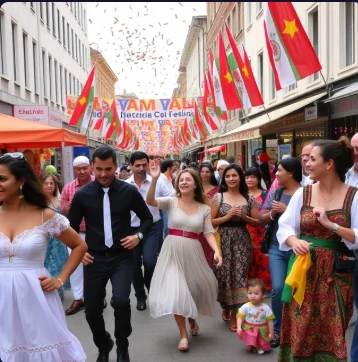
Ethnicity is not the same as race. Race is based on physical characteristics. Ethnicity is based on shared cultural traditions — language, ancestry, religion, food, holidays, and a sense of common history. An Italian-American and a Nigerian-American may both be classified as Black or white in racial terms, but their ethnic identities differ.
Ethnic groups often maintain boundaries through endogamy (marrying within the group), language, and ritual. These boundaries can soften over generations. Assimilation describes the process by which ethnic groups adopt the dominant culture. Multiculturalism encourages groups to retain distinct identities.
Components of ethnicity
- Language or dialect
- Ancestry and homeland
- Religion and rituals
- Cuisine and festivals
- Shared historical memory
Ethnic conflict arises when groups compete for territory, resources, or political power. The breakup of Yugoslavia in the 1990s is one example. Ethnic identity can also be a source of pride, solidarity, and cultural richness.
Comments
No comments yet. Be the first to share a thought.
Leave a comment