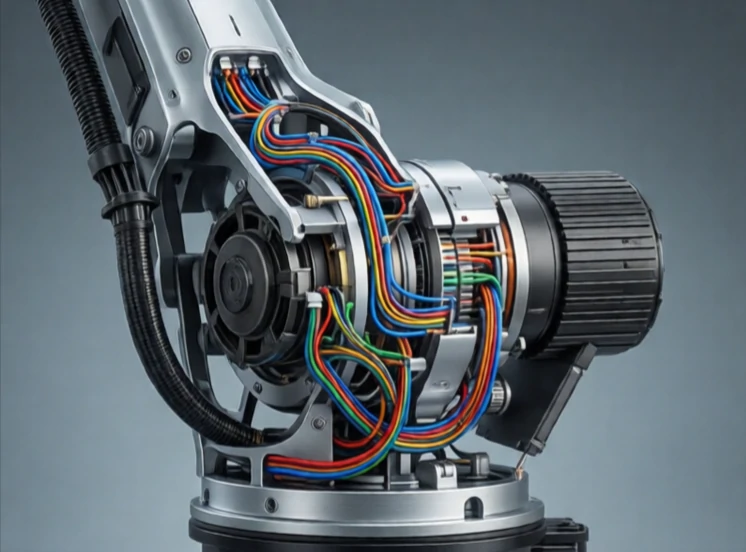
A link is a rigid part that connects two joints in a robot. It is the bone between the joints. The link transmits force and motion from one joint to the next. Its length, mass, and stiffness affect how the robot moves and how much it can carry.
In a robot arm, the links are the segments you see: the base column, the upper arm, the forearm, and the wrist housing. Each link connects two joints. The shape is often a tube or a box, optimized for stiffness and weight. Carbon fiber links are stiff and light. Aluminum links are cheaper and easier to machine. Steel links are heavy but strong.
Link design considerations
- Stiffness: resists bending under load.
- Weight: lighter links reduce inertia and motor size.
- Damping: reduces vibration.
- Cable routing: wires pass through or along the link.
- Thermal expansion: affects precision in extreme environments.
A flexible link is a problem. If the link bends under load, the end effector does not go where the controller thinks it does. That is why high-precision robots use stiff, lightweight materials. The link also carries wiring for motors, encoders, and sensors. Routing cables through a moving link without pinching or fatiguing them is a real design challenge. In a humanoid robot, the links look like bones, but they are engineered structures with motors, sensors, and wiring packed inside. The link is not just a connector. It is a structural element that defines the robot's reach and precision.
Comments
No comments yet. Be the first to share a thought.
Leave a comment