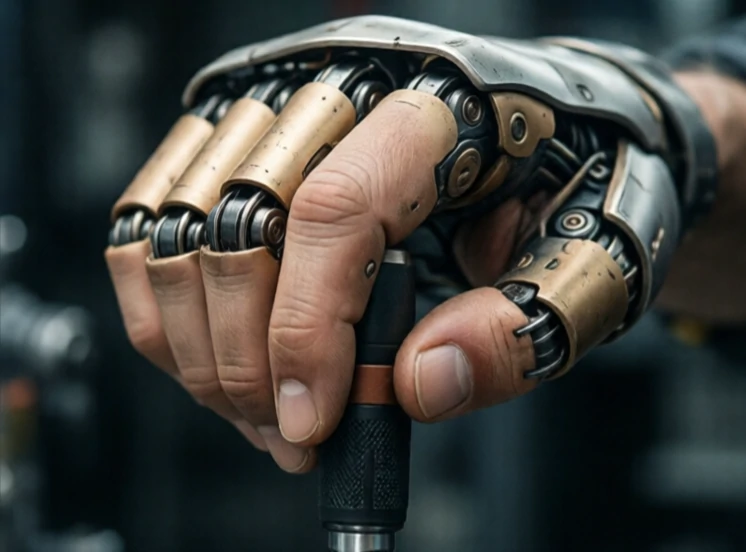
Grasping is the act of seizing and holding an object. For a robot, it is a complex physical interaction. The fingers must contact the object, apply enough force to hold it, and not so much that it deforms or slips. The robot must also know when the grasp is secure.
Humans grasp without thinking. Robots have to sense, plan, and control. Vision identifies the object. Grasp planning chooses contact points. The gripper closes. Force sensors detect contact. The robot lifts and checks for slip. If the object moves, the robot adjusts. All of this happens in under a second for a well-designed system.
Grasping challenges
- Object shape and size variation.
- Surface friction and weight distribution.
- Gripper limitations and finger geometry.
- Sensor noise and calibration.
- Real-time control at contact.
Research in grasping has moved from analytical models to data-driven methods. Large datasets of grasps, simulated and real, train neural networks to predict successful grasps from images. The results are impressive but not perfect. Transparent objects confuse depth cameras. Reflective surfaces create noise. Soft objects deform unpredictably. A robot that grasps well in the lab may fail in a cluttered warehouse. The best systems combine vision, touch, and force control, and they plan for the possibility of failure. Grasping is the foundation of manipulation. Without it, a robot can only look at the world, not change it.
Comments
No comments yet. Be the first to share a thought.
Leave a comment