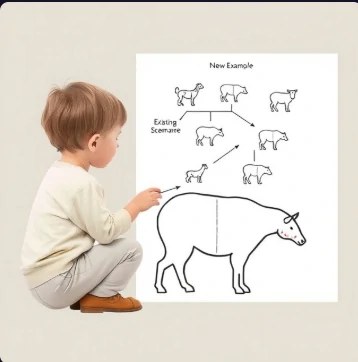
A child who has a schema for “dog” can recognize previously unseen dogs and may briefly misclassify a cat. A schema is a mental structure that organizes knowledge about a concept, event, or type of stimulus and guides perception, memory, and inference.
Schemas are built from experience and become more abstract and differentiated with expertise. They enable rapid processing yet can produce bias when new information is forced into an existing framework. Scripts are schemas for sequences of events; stereotypes can function as social schemas.
Schema theory has been applied to reading comprehension, eyewitness memory, and cultural differences in cognition. Activating a schema makes related information more accessible and can lead to schematic intrusions in recall. Flexible use of schemas, including the ability to revise them, is a mark of adaptive cognition.
What we already know shapes what we are able to see and remember.
Comments
No comments yet. Be the first to share a thought.
Leave a comment