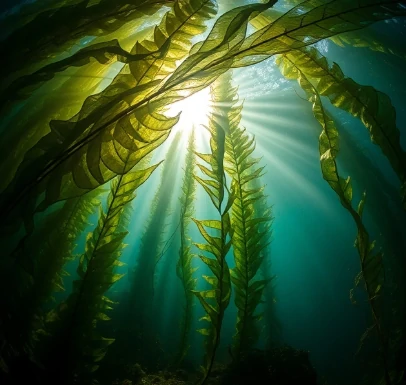
In cool, nutrient-rich coastal waters, large brown algae known as kelps grow upright from the seafloor and form dense, towering stands. These kelp forests are among the most productive ecosystems on the planet and create three-dimensional habitat for countless invertebrates, fishes, and marine mammals.
Kelps require hard substrate for attachment, sufficient light, and temperatures generally below 20 °C. They grow rapidly, sometimes many centimeters per day, and are grazed by sea urchins, snails, and other herbivores. When predators such as sea otters or certain fishes control the grazers, kelp forests flourish; when grazers become too abundant, the kelp can be reduced to barren ground.
Kelp forests protect shorelines, support valuable fisheries, and sequester carbon. They are sensitive to warming events, marine heatwaves, and changes in predator populations. Restoration efforts include transplanting kelp, controlling urchins, and protecting key predators. Divers and researchers working in healthy kelp forests often describe the experience as swimming through a living cathedral of fronds.
A single kelp plant can grow from the seafloor to the surface in one season under ideal conditions.
Comments
No comments yet. Be the first to share a thought.
Leave a comment