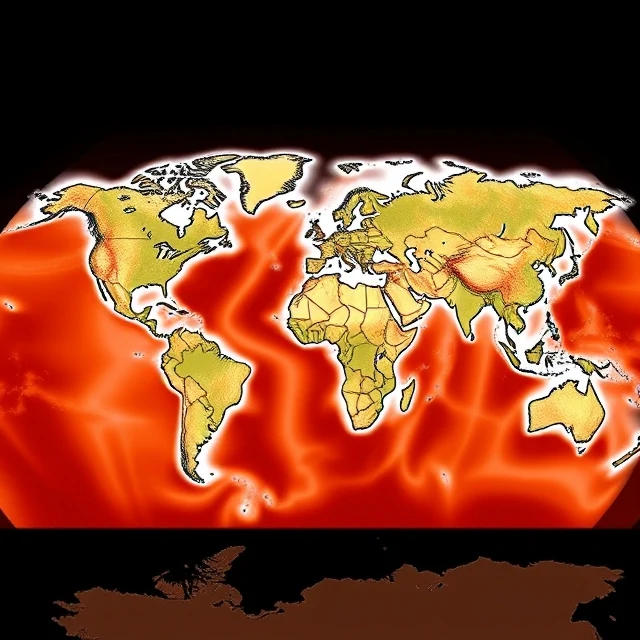
The Earth’s outer shell is broken into large moving pieces. A tectonic plate is a rigid segment of the lithosphere that drifts over the denser, more ductile mantle beneath. Continents and oceans ride on these plates.
Plate boundaries are the sites of most earthquakes and volcanoes. Divergent boundaries create new crust; convergent boundaries consume it; transform boundaries slide horizontally. The theory of plate tectonics unifies a wide range of geological observations.
Plates move only a few centimeters per year, yet over millions of years they rearrange continents and ocean basins. GPS measurements now track plate motion directly. Understanding tectonic plates is fundamental to explaining the distribution of mountains, earthquakes, and many mineral resources.
- Rigid slab of Earth’s lithosphere
- Moves over the underlying mantle
- Interactions cause earthquakes and volcanoes
- Explains continental drift and mountain building
Comments
No comments yet. Be the first to share a thought.
Leave a comment