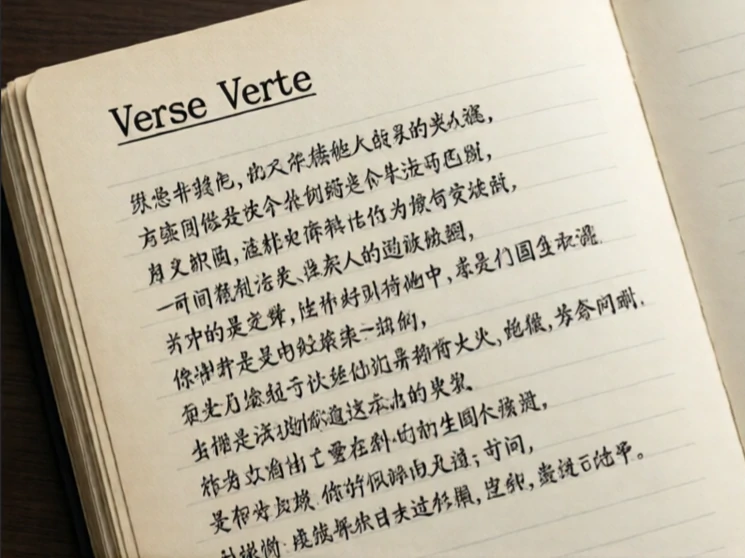
Free verse is poetry that does not adhere to a regular meter or rhyme scheme. Its rhythms are based on the cadences of speech, the breath, or the shapes of thought rather than on traditional metrical feet.
Walt Whitman is often credited with opening English poetry to free verse; later modernists such as Eliot, Pound, and Williams made it a dominant mode. Free verse is not simply prose broken into lines. Line breaks, spacing, and the patterning of sounds and images still create form—just not the inherited forms of sonnet or blank verse. The poet must invent a rhythmic logic for each poem.
Critics sometimes charge free verse with formlessness; its defenders reply that it substitutes organic form for mechanical regularity. In practice, much free verse retains subtle sonic and structural patterns. The freedom is real, yet it places greater responsibility on the poet to justify every formal choice.
Poetry that finds its own rhythm without a fixed metrical template is free verse.
Comments
No comments yet. Be the first to share a thought.
Leave a comment