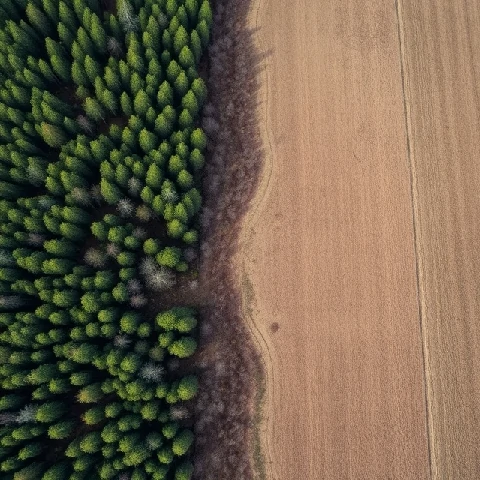
Deforestation is the large-scale removal of forests, often for agriculture, logging, or development. Humans have cleared forest for thousands of years, but the pace accelerated dramatically in the 20th century. Tropical forests in the Amazon, Congo Basin, and Southeast Asia have been hit hardest. Between 1990 and 2020, the world lost around 420 million hectares of forest, an area larger than the European Union. The rate has slowed in some regions, but it remains high.
The causes vary by region. In the Amazon, cattle ranching and soy farming drive most clearing. In Southeast Asia, palm oil plantations are a major factor. In Africa, small-scale agriculture and fuelwood collection play large roles. Logging, mining, and road building open forests to further settlement. Deforestation destroys habitat, displaces Indigenous communities, and releases carbon stored in trees and soil. It also disrupts rainfall patterns, since forests recycle water into the atmosphere. The Amazon is sometimes called a flying river because it releases so much moisture.
Main drivers
- Agricultural expansion for crops and livestock.
- Logging for timber and paper.
- Mining and infrastructure development.
- Fuelwood collection and small-scale farming.
Reforestation and forest protection can help, but newly planted forests take decades to match the carbon storage and biodiversity of old-growth stands.
Comments
No comments yet. Be the first to share a thought.
Leave a comment