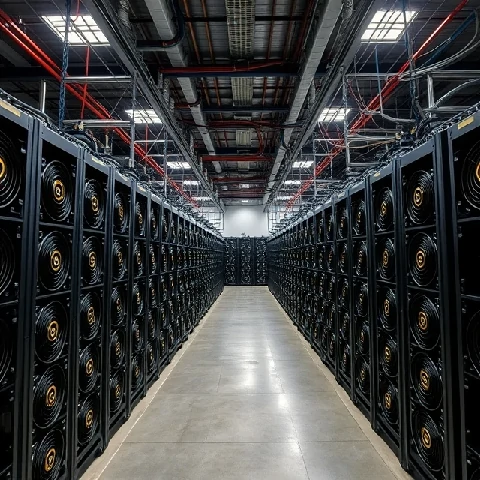
Mining validates transactions and adds new blocks to a proof-of-work blockchain. Miners compete to solve a cryptographic puzzle. The winner gets to create the next block and collects the block reward plus transaction fees. The process secures the network because rewriting history would require redoing all the work for every block after the one being changed. That is computationally and economically impractical on a large chain.
Bitcoin mining started with CPUs in 2009. Then came GPUs, then FPGAs, then ASICs. Each jump made mining faster and more specialized. Today, mining is an industrial activity. Large farms run thousands of machines in warehouses near cheap hydroelectric or natural gas power. The hardware becomes obsolete quickly. An ASIC that was profitable last year may be worthless this year if difficulty rises and the price falls. Mining is not just about earning coins. It is about securing the ledger. Without miners, proof-of-work chains stop producing blocks and the network halts.
Mining hardware evolution
- CPU — 2009, general-purpose, quickly obsolete
- GPU — 2010, faster hashing, still versatile
- FPGA — 2011, programmable hardware, short-lived
- ASIC — 2013 onward, application-specific, dominant today
Mining rewards those with cheap power and efficient hardware. Everyone else subsidizes the network through higher costs.
Comments
No comments yet. Be the first to share a thought.
Leave a comment