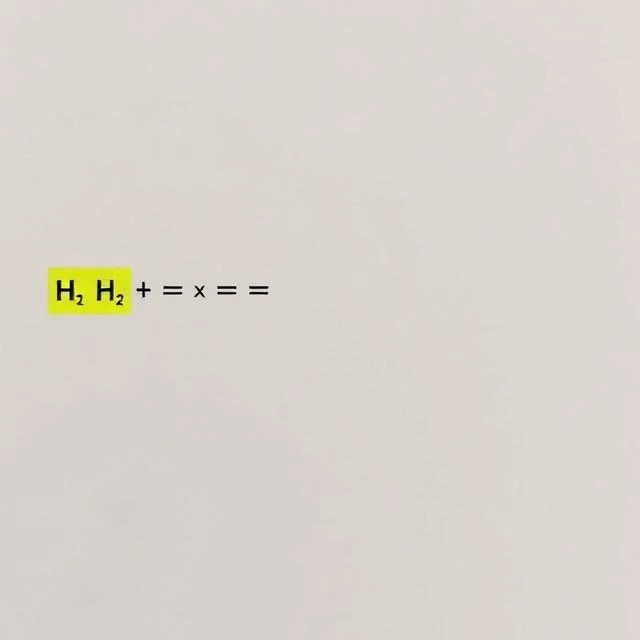
A chemical reaction starts with reactants. They are the substances consumed during the reaction. They appear on the left side of the chemical equation. In the reaction 2H2 + O2 -> 2H2O, the reactants are hydrogen and oxygen. The arrow means yields or produces. The products are on the right. The equation is balanced so that the number of atoms of each element is the same on both sides. Matter is conserved.
The amount of reactant determines how much product can form. The limiting reactant is the one that runs out first. It limits the extent of the reaction. The excess reactant is the one that remains after the reaction is complete. Identifying the limiting reactant is a key step in stoichiometry. It determines the theoretical yield.
Reactants can be elements, compounds, or ions. They can be in any state of matter: solid, liquid, gas, or aqueous. The reaction rate depends on the concentration, temperature, surface area, and presence of a catalyst. Increasing the concentration of a reactant usually increases the rate because more collisions occur. Increasing the temperature increases the kinetic energy of the molecules, making collisions more energetic.
The word reactant is sometimes used interchangeably with reagent. A reagent is a substance used to bring about a reaction, and it may or may not be consumed. A reactant is always consumed. The distinction matters in laboratory practice.
Comments
No comments yet. Be the first to share a thought.
Leave a comment