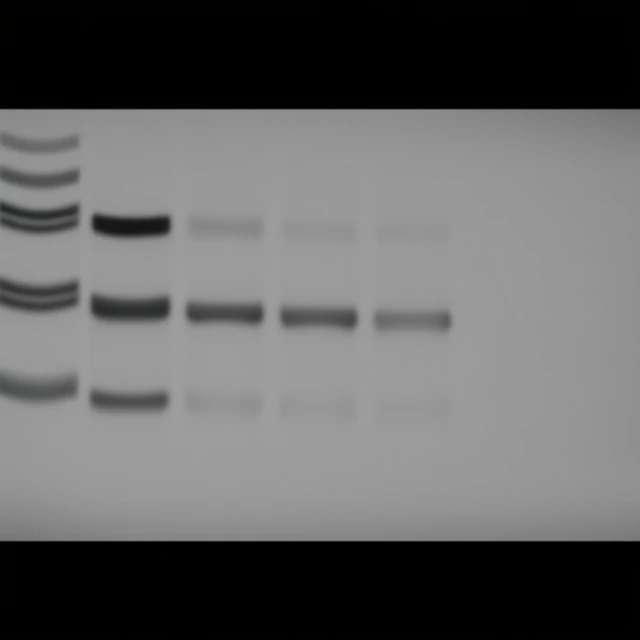
A Western blot detects a specific protein in a sample. It separates proteins by size, transfers them to a membrane, and probes them with an antibody. The result is a band at the position corresponding to the protein's molecular weight. If the band is present, the protein is there. If it is absent, the protein is not. It is a simple concept, but the technique has many steps and many opportunities for error.
The procedure has several stages. Proteins are extracted from cells or tissue and denatured. They are loaded onto a polyacrylamide gel and separated by electrophoresis. The proteins are transferred to a nitrocellulose or PVDF membrane. The membrane is blocked to prevent non-specific binding. A primary antibody binds the target protein. A secondary antibody, linked to an enzyme or fluorophore, binds the primary antibody. A substrate is added, and the signal is detected on film or with an imaging system.
Western blots are used to confirm the presence of a protein, compare expression levels between samples, and detect post-translational modifications. They are used in research and in clinical diagnostics, including the confirmatory test for HIV and the test for Lyme disease. They are also used to validate antibodies and check for off-target effects.
The technique is semi-quantitative at best. It requires careful controls and normalization. It is time-consuming and can be finicky. But it remains a standard tool in molecular biology.
Comments
No comments yet. Be the first to share a thought.
Leave a comment