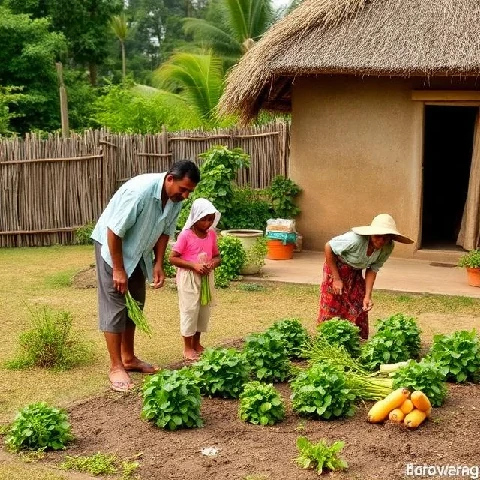
A subsistence economy is one in which production is mainly for the group's own needs. People grow, hunt, or gather what they will eat, and make what they will use. There is little surplus and little trade for profit. This does not mean poverty. Many subsistence economies provide adequate nutrition and a reasonable amount of leisure. What they lack is accumulation. Wealth does not pile up because there is no market to sell to and no reason to store more than the group can consume.
Subsistence economies take many forms: foraging, pastoralism, horticulture, and small-scale agriculture. Most combine strategies. A family may grow crops, keep a few animals, and hunt occasionally. The common thread is that production is oriented toward use, not exchange. Surplus, when it appears, is usually given away or feasted rather than sold. This changes when markets and states intrude. Roads, taxes, and cash crops pull subsistence producers into wider economies, often on unfavorable terms.
Common features
- Production for direct use, not sale.
- Limited surplus and storage.
- Diverse strategies to reduce risk.
- Sharing norms that redistribute abundance.
Subsistence economies are not failed market economies. They are rational adaptations to specific environments and social conditions.
Comments
No comments yet. Be the first to share a thought.
Leave a comment