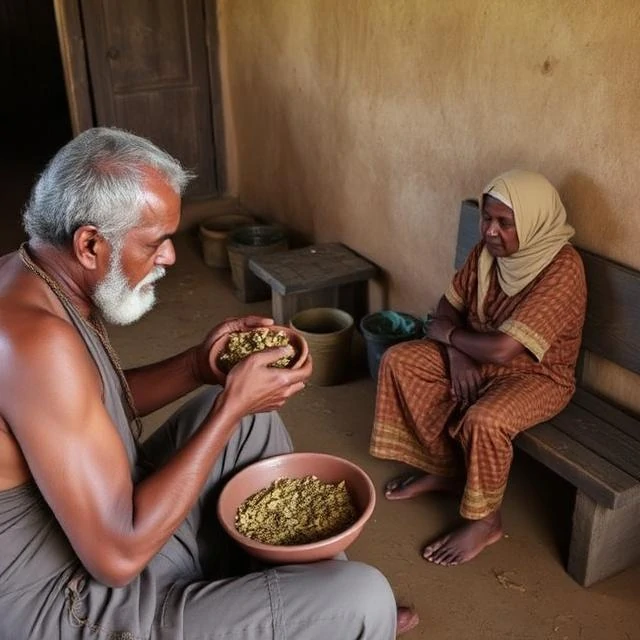
Ethnomedicine studies traditional medical beliefs and practices across cultures. It covers herbal remedies, bone setting, ritual healing, midwifery, and the ways people explain sickness and health. Every society has a medical system, whether or not it has doctors in white coats. These systems are embedded in wider beliefs about the body, the spirit, and social relationships.
In many traditions, illness is not only biological. It may be caused by sorcery, broken taboos, or angry ancestors. Treatment then involves ritual specialists, confession, or sacrifice alongside plant medicine. That does not mean the plants are ineffective. Some are pharmacologically active, and researchers have studied them for decades. The World Health Organization estimates that a large share of the world's population still relies primarily on traditional medicine.
Common elements
- Herbal remedies prepared from local plants.
- Healers, shamans, and midwives as specialists.
- Explanations linking illness to social or spiritual causes.
- Preventive practices tied to diet, season, and ritual.
Medical pluralism is the norm. Many people consult both a traditional healer and a clinic, depending on the problem and what they can afford.
Comments (2)
Leave a comment