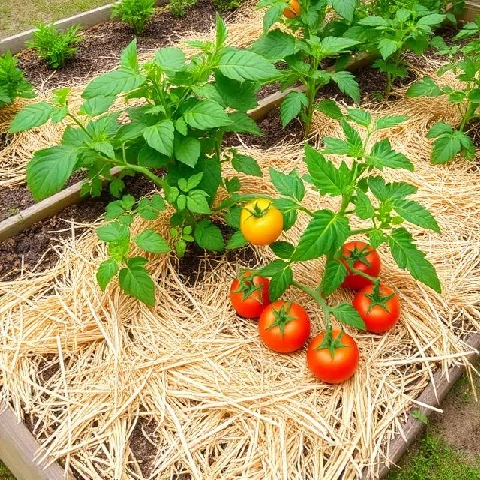
Mulch is any material spread over the soil surface to protect it. Straw, wood chips, grass clippings, leaves, compost, gravel, and plastic sheeting all qualify. The purpose is the same: cover the ground so it does not dry out, erode, or grow weeds.
Organic mulches break down over time and feed soil life as they do. Straw and hay are common around vegetables. Wood chips suit orchards and perennial beds. Compost doubles as mulch and slow-release fertiliser. Plastic mulch, usually black or clear, warms soil in spring and is standard in commercial strawberry and tomato production, though disposal is a problem. Biodegradable films made from cornstarch or paper are increasingly used.
What mulch does
- Reduces evaporation from the soil surface
- Suppresses weed germination
- Buffers soil temperature
- Protects against erosion from rain and wind
Mulch has drawbacks. Thick layers can harbour slugs and voles. Wood chips mixed into soil can tie up nitrogen as they decompose. Applied too early in spring, mulch keeps soil cold and delays growth.
Comments
No comments yet. Be the first to share a thought.
Leave a comment