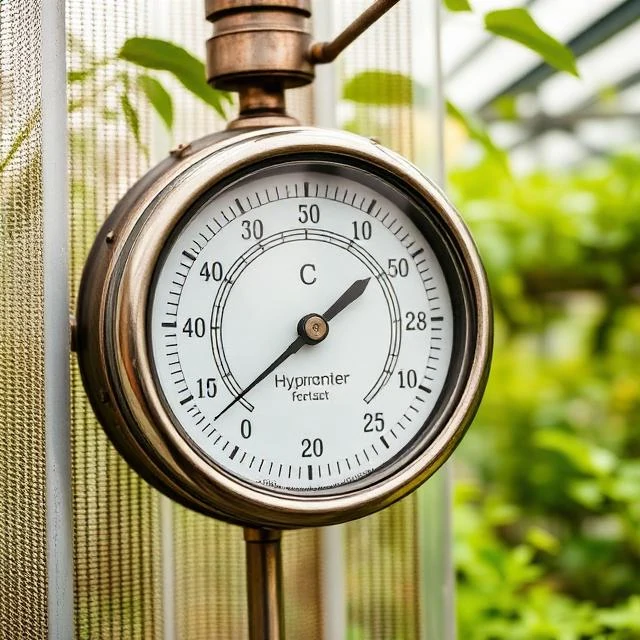
Air that feels sticky to a person feels that way because of water vapour, and a hygrometer measures exactly how much is there. The oldest design, still used in some form today, relies on a human hair. Hair lengthens slightly as humidity rises, and a needle attached to the strand records the change.
Modern instruments use capacitive sensors, chilled mirrors, or wet-and-dry bulb thermometers. In agriculture, hygrometers matter for a range of practical reasons. Hay baled above about 18 percent moisture will heat and mould. Grain stored too damp will spoil. Fungal diseases like powdery mildew and late blight spread fastest in high humidity, so greenhouse growers keep hygrometers close to the canopy.
Where you meet them
- Greenhouses and mushroom sheds
- Hay and grain storage barns
- Weather stations recording relative humidity
- Soil moisture probes that measure water in the root zone
The reading is only as good as its placement. A hygrometer tucked against a wall tells you about the wall, not the air around your tomato plants.
Comments
No comments yet. Be the first to share a thought.
Leave a comment