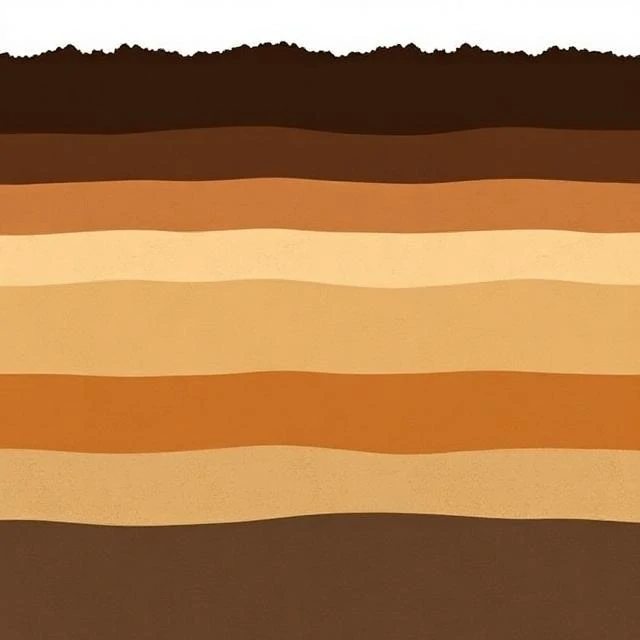
Dig a deep pit in a field and you will see bands of colour and texture stacked on top of each other. Each band is a soil horizon, a layer that formed over centuries through the slow work of weather, roots, worms, and water.
Soil scientists label them with letters. O is the surface litter of leaves and stems. A is topsoil, dark with organic matter and alive with microbes. E is a pale leached layer. B is subsoil, enriched with clay and iron washed down from above. C is weathered parent material, and R is solid bedrock.
Why the sequence matters
- Rooting depth depends on how thick the A and B horizons are
- Drainage is set by texture and structure of each layer
- Nutrient supply comes mostly from the A horizon
- Erosion strips the A layer first, and it takes decades to rebuild
Soil surveys map horizons across whole regions. For a farmer, the practical question is simple: how deep does the good soil go, and what happens when a hardpan or clay layer stops roots from reaching further?
Comments
No comments yet. Be the first to share a thought.
Leave a comment