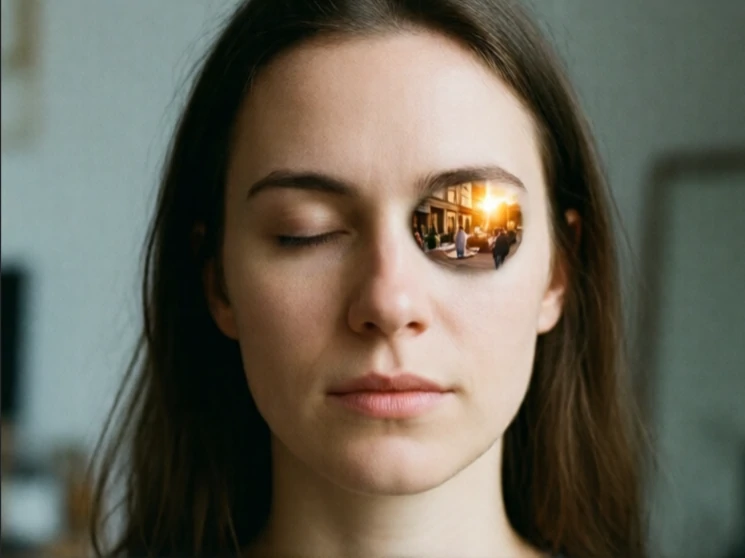
Imagery is the mental representation of sensory experience in the absence of the corresponding external stimulus. Visual imagery—mental pictures—is the most studied form, yet imagery exists for sound, movement, and other modalities as well.
Mental images can be inspected, rotated, and scanned in ways that parallel the perception of real objects. The time required to rotate a mental image increases with the angle of rotation, just as it does for physical objects. Imagery aids memory: forming vivid mental pictures of to-be-remembered items improves later recall. It is also used in skill rehearsal—athletes and musicians often practice sequences in the mind’s eye—and in therapeutic techniques such as systematic desensitization and guided imagery for pain control.
Debate continues over the format of mental images. Some theories treat them as picture-like representations; others treat them as descriptive, language-like structures. Neuroimaging shows that visual imagery activates many of the same brain areas involved in visual perception, supporting a degree of shared machinery.
When you “see” a familiar face with your eyes closed, you are using imagery.
Comments
No comments yet. Be the first to share a thought.
Leave a comment