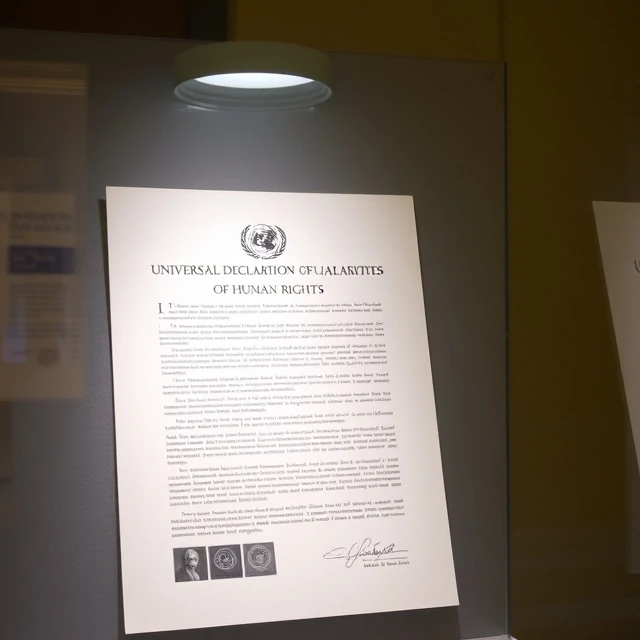
A government can take your passport, your property, even your life. What it cannot legitimately take—according to a body of law that grew out of the ashes of two world wars—is your status as a rights-holder. Human rights are the claims you hold simply because you exist. They are not granted by a king, a constitution, or a majority vote. The Universal Declaration of Human Rights, adopted in 1948, lists thirty articles, from freedom of speech to the right to rest and leisure.
The idea is old. Cyrus the Great freed slaves in Babylon. The Magna Carta limited a king's power. But the modern system is new. It includes treaties, courts, and monitoring bodies. The European Court of Human Rights can order a state to pay damages. The International Criminal Court can prosecute individuals for genocide.
Three generations
- Civil and political: voting, fair trial, free expression.
- Economic and social: food, housing, healthcare, education.
- Collective: self-determination, clean environment, peace.
Enforcement is uneven. Powerful states ignore rulings. Weak states get pressured. Still, the language of human rights has become the default way ordinary people challenge arbitrary power, from a village council to a security council.
Comments
No comments yet. Be the first to share a thought.
Leave a comment