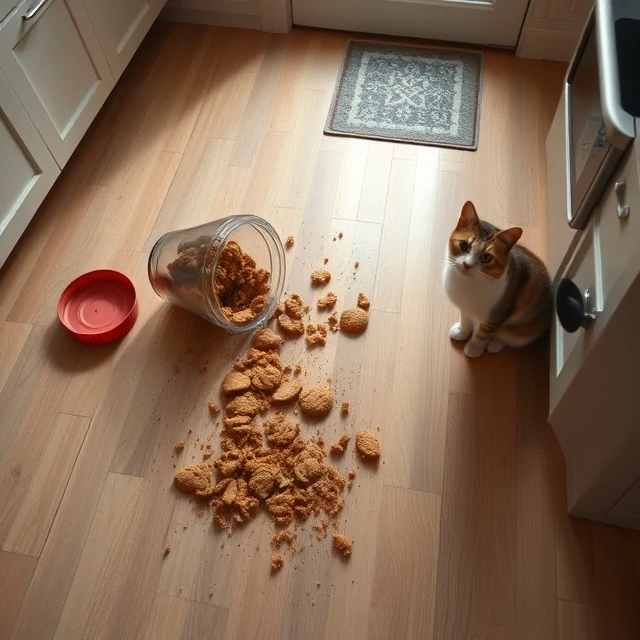
You walk into your kitchen and find the cookie jar on the floor, the lid off, and crumbs on the tiles. You do not deduce what happened from general principles, and you cannot induce it from repeated observations. You guess. The best explanation is that someone knocked it over. That guess is abduction, the form of reasoning that generates hypotheses to explain surprising facts.
Charles Sanders Peirce introduced the term in the late 19th century, distinguishing it from deduction and induction. Deduction draws necessary conclusions from premises. Induction generalizes from cases. Abduction proposes a likely cause. A doctor diagnosing a fever, a detective reading a crime scene, a scientist spotting an anomaly in data: all reason abductively. The conclusion is not guaranteed. It is the most plausible story given what you know, and it may be wrong.
How it works
- Start with a surprising observation. Something does not fit expectations.
- Generate candidate explanations. Several hypotheses may fit.
- Evaluate plausibility. Weigh simplicity, coherence, and prior knowledge.
- Test the best candidate. Treat it as a hypothesis to be checked.
Abduction is the engine of discovery, but it is not proof. Peirce called it the only form of reasoning that introduces new ideas, and also the most fallible.
Comments
No comments yet. Be the first to share a thought.
Leave a comment