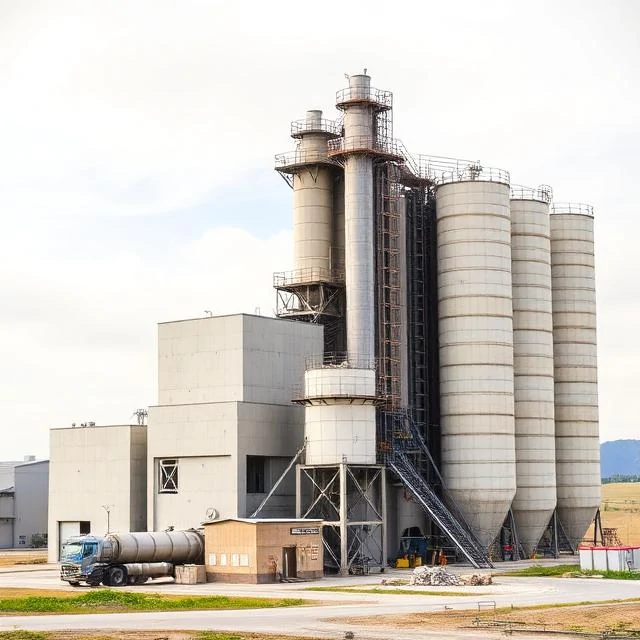
Cement is a binder. It hardens when mixed with water and holds materials together. It is not concrete. Concrete is cement plus aggregate plus water. Cement is the powder that makes concrete work. The most common cement is Portland cement, made by heating limestone and clay in a kiln to about 1,450 degrees Celsius. The resulting clinker is ground with gypsum to make the powder. When water is added, the cement undergoes a chemical reaction called hydration. It forms crystals that interlock and harden. In cooking, the closest equivalent is a starch slurry. It thickens a sauce and binds its ingredients. It is not cement. But it performs a similar function. It holds the dish together.
Cement has several types. Type I is general-purpose. Type II is moderate sulfate resistance. Type III is high early strength, used when concrete must gain strength quickly. Type IV is low heat of hydration, used in mass concrete. Type V is sulfate resistant, used in marine environments. Blended cements combine Portland cement with fly ash, slag, or silica fume to improve performance and reduce carbon emissions. In cooking, the equivalent is a roux. It is a mixture of flour and fat, cooked to different stages. A white roux thickens a white sauce. A brown roux thickens a gumbo. The darker the roux, the deeper the flavor. The roux is the binder. The sauce is the result.
Cement production is a major source of carbon dioxide. The kiln reaction releases CO2 from the limestone, and the fuel used to heat the kiln releases more. Cement accounts for about 8 percent of global CO2 emissions. The industry is working on lower-carbon alternatives. In cooking, the roux is a small part of the dish. It is also a critical part. It thickens the sauce. It carries the flavor. It is the foundation. The cement is the foundation of the building. The roux is the foundation of the sauce. Both are binders. Both are essential. Both are invisible when they work.
Comments
No comments yet. Be the first to share a thought.
Leave a comment