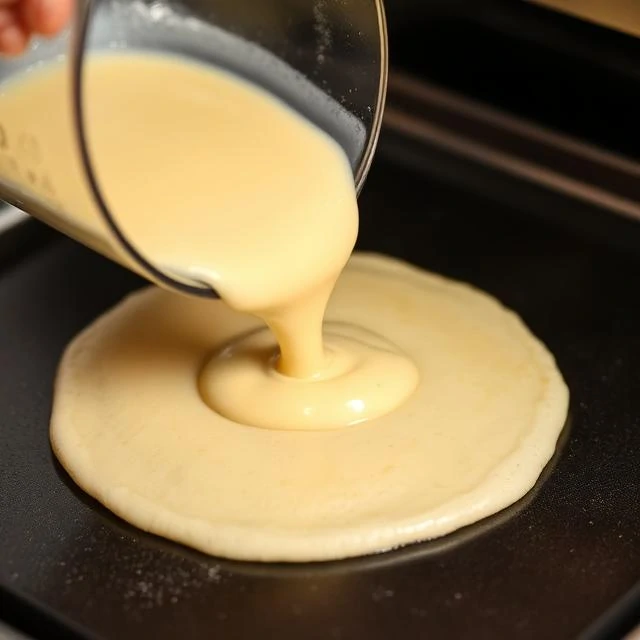
Batter is a thin mixture of flour, eggs, and liquid. It is pourable, not shapable. It is used for cakes, pancakes, waffles, and coatings for fried food. The ratio of flour to liquid determines the consistency. A thin batter makes a delicate crepe. A thick batter makes a sturdy pancake. The batter is the base. The rest is technique.
Batter is mixed gently. Overmixing develops gluten, which makes cakes tough and pancakes chewy. The goal is to combine the ingredients without activating too much gluten. That is why recipes say to stir until just combined. Lumps are acceptable. A smooth batter is not always better. For fried coatings, the batter must adhere to the food and puff when it hits the oil. A cold batter and a hot oil create steam, which puffs the coating and makes it crisp.
Batter comes in many forms. A tempura batter uses ice water and low-gluten flour for a light, crispy shell. A beer batter uses carbonation for extra puff. A pancake batter uses baking powder for rise. A cake batter uses butter and sugar creamed together for structure. Each has its own balance of flour, liquid, fat, and leavening. The batter is the foundation. The cook is the architect. The result is breakfast, or dinner, or dessert. It is always something worth eating.
Comments
No comments yet. Be the first to share a thought.
Leave a comment