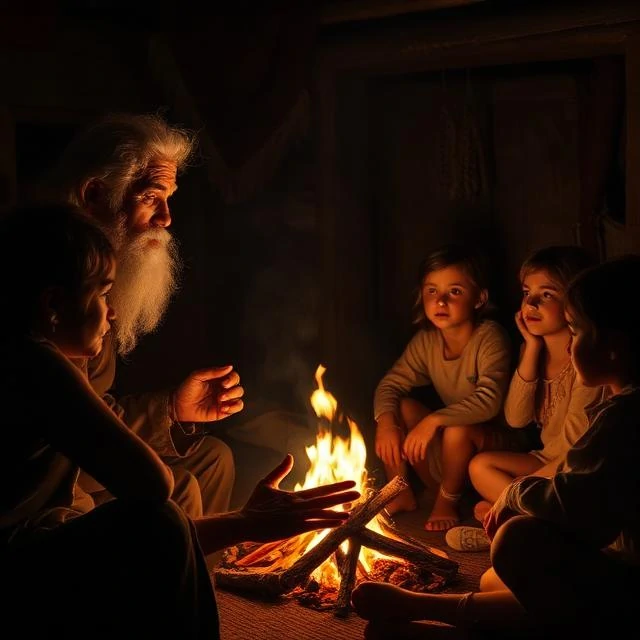
Folklore covers the traditional beliefs, stories, and customs passed down orally within a community. It includes folktales, legends, myths, proverbs, riddles, songs, dances, and material crafts. The term was coined in 1846 by William Thoms, who wanted a word for the unwritten culture of ordinary people. Since then, folklorists have documented everything from Appalachian ballads to urban legends about alligators in sewers.
Folklore is not frozen or quaint. It adapts. A story told around a fire in one century becomes a chain email or a viral video in another. The same narrative structures recur across cultures: the trickster, the quest, the foolish hero who succeeds by luck. Folklorists study both the texts and the performances, paying attention to who tells a story, when, and why.
Genres
- Myths: sacred narratives explaining origins.
- Legends: stories told as true, often about local places.
- Folktales: fictional stories for entertainment or teaching.
- Material folklore: quilts, tools, recipes, and crafts.
Folklore survives because it is useful. It teaches, warns, entertains, and binds communities together.
Comments
No comments yet. Be the first to share a thought.
Leave a comment