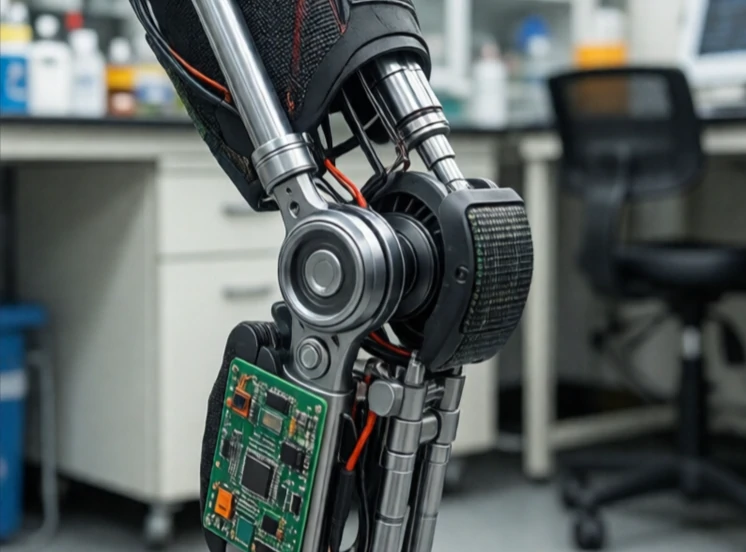
A prosthetic replaces a missing body part. Most are limbs: arms, hands, legs, feet. Some are cosmetic. Others are functional, designed to restore movement and independence. The field sits at the intersection of medicine, mechanics, and robotics.
Body-powered prosthetics use cables and harnesses. The user's shoulder or remaining limb pulls a cable to open a hook or bend a elbow. They are durable and lightweight. Myoelectric prosthetics use electrodes on the skin to read muscle signals. The signal drives a motor in the prosthetic hand. Microprocessor knees use sensors to adjust damping in real time, letting users walk downstairs more naturally.
Prosthetic types
- Passive: cosmetic, no moving parts.
- Body-powered: cables and harness, user-driven.
- Myoelectric: muscle-signal controlled, motorized.
- Microprocessor: sensor-controlled, adaptive.
- Osseointegrated: attached directly to bone.
The challenges are comfort, control, and feedback. A prosthetic socket must fit precisely or it causes pain and skin damage. Control is limited by the number of muscle signals available. Feedback is almost nonexistent. A user cannot feel what the prosthetic hand is touching. Research aims to solve this with targeted muscle reinnervation, where nerves are rerouted to provide more control signals, and with sensory feedback that stimulates nerves to create touch sensations. Advanced prosthetics are expensive and not universally available. But for many users, a good prosthetic is transformative. It restores function that most people take for granted.
Comments (2)
Leave a comment