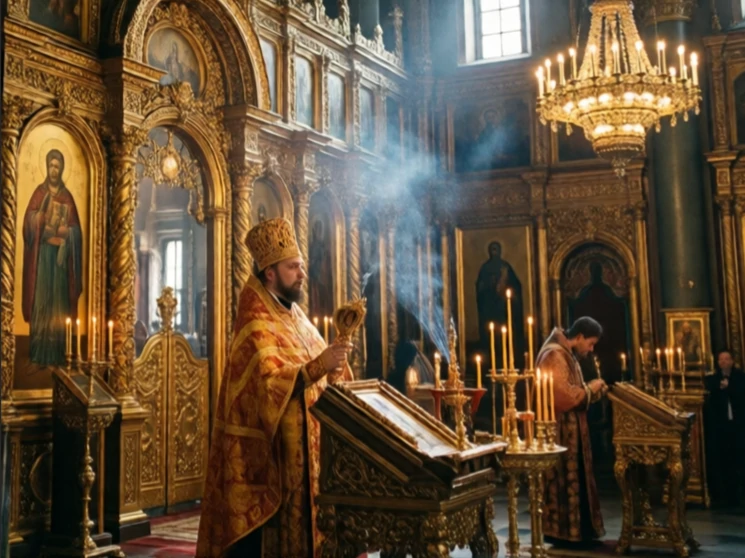
When the Roman Empire split and the Western church developed along Latin lines, the churches of the East continued in the Greek and Byzantine tradition. Eastern Orthodoxy is the living form of that continuity. Its heartlands remain Greece, Russia, the Balkans, and the Middle East, though immigrant communities have carried it across the globe.
Doctrine is defined by the first seven ecumenical councils and by the ongoing consensus of the Church. The Trinity, the two natures of Christ, and the veneration of icons are non-negotiable. Worship is liturgical, lengthy, and dense with symbolism. The Divine Liturgy of St. John Chrysostom is the ordinary Sunday service; the building itself is understood as an image of heaven, with the iconostasis marking the boundary between the nave and the altar. Icons are not decorations but windows onto the presence of the saints and of Christ himself.
Authority is conciliar rather than monarchical. No single bishop holds the kind of universal jurisdiction claimed by the Roman papacy. Autocephalous churches—Russian, Greek, Serbian, and others—govern themselves while remaining in communion. Monasticism, especially the tradition of Mount Athos, continues to shape spirituality through the Jesus Prayer and the pursuit of theosis, the gradual participation of the human person in the divine life.
For the Orthodox, the Church is not primarily an institution but the Body of Christ, already tasting the age to come in every Eucharist.
Comments
No comments yet. Be the first to share a thought.
Leave a comment