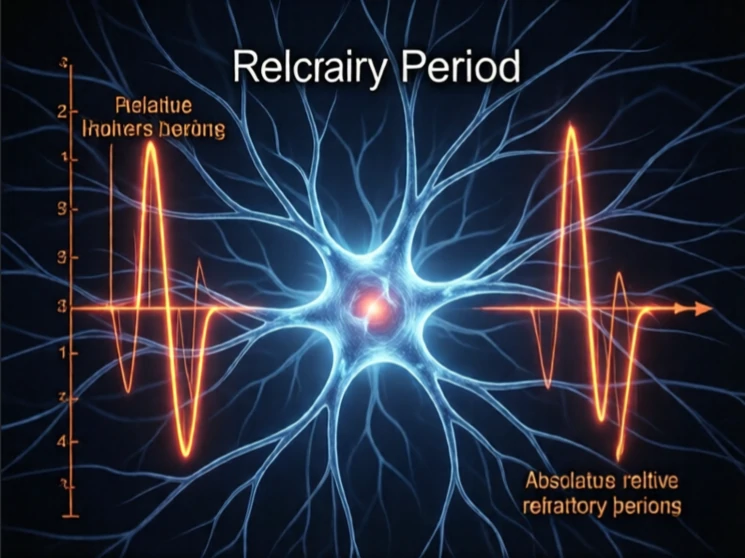
The refractory period is a brief interval after a neuron fires an action potential during which it cannot fire again, or can fire only with a stronger-than-usual stimulus. It has two phases.
The absolute refractory period occurs while sodium channels are inactivated; no stimulus, however strong, can trigger another action potential. The relative refractory period follows, during which a stronger-than-normal stimulus can produce a new action potential. The refractory period ensures that action potentials travel in one direction along the axon and limits the maximum firing rate of a neuron.
Why it matters
- Prevents backward propagation of the action potential
- Sets an upper limit on firing frequency
- Contributes to the coding of stimulus intensity
Comments
No comments yet. Be the first to share a thought.
Leave a comment