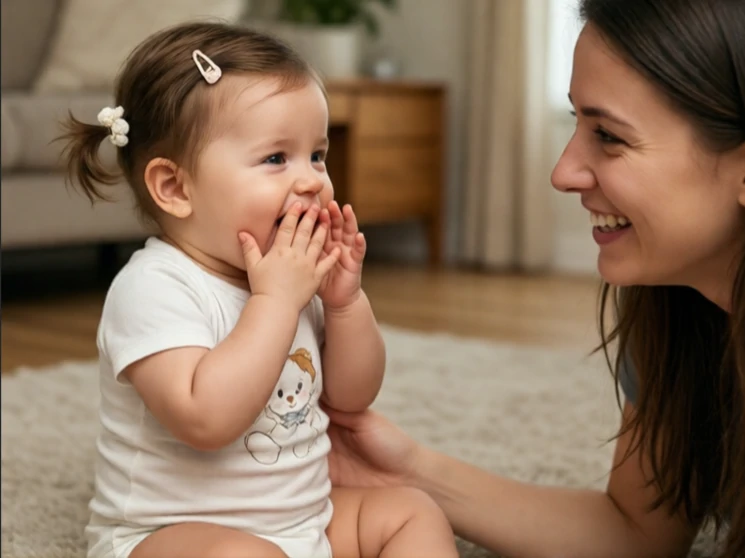
Around six to nine months of age most infants begin to produce repetitive syllables—ba-ba, da-da, ma-ma. This is the babbling stage, a universal milestone in the development of speech.
Early babbling contains a wide range of sounds, including some that do not appear in the language of the household. Over the following months the repertoire narrows toward the phonemes of the surrounding language. Deaf infants babble with their hands if exposed to sign language, showing that the drive to produce structured, repetitive output is not limited to the vocal tract. Babbling is not yet referential; the syllables do not stand for objects or events. Yet it provides practice in the motor control and auditory feedback that later speech will require.
Parents often treat babbling as conversational, responding as if the infant had spoken. That social contingency helps keep the infant engaged and may support the transition to first words. By the end of the first year many children produce their first recognizable words, and the babbling stage gradually gives way to meaningful speech.
Babbling is the sound of the language system tuning itself before it has anything particular to say.
Comments
No comments yet. Be the first to share a thought.
Leave a comment