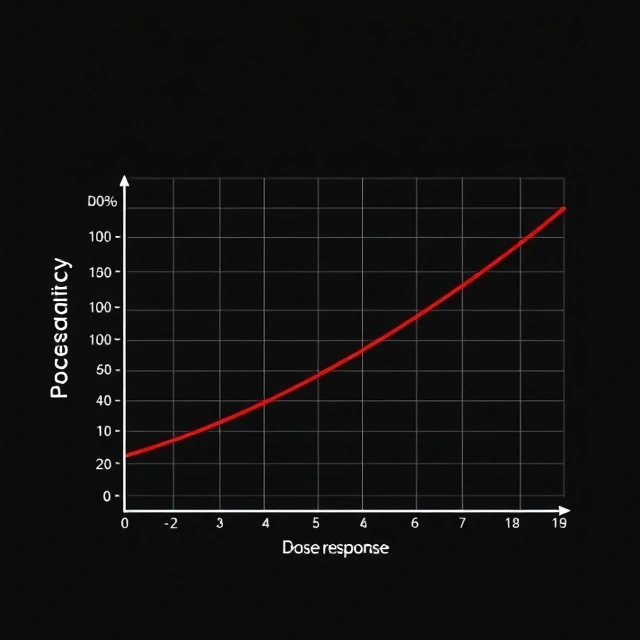
Pharmacokinetics is what the body does to a drug. Pharmacodynamics is what the drug does to the body. It studies the relationship between drug concentration and effect, the mechanisms by which drugs act, and the factors that modify their response. If a drug binds to a receptor and triggers a signal, that is pharmacodynamics. If it blocks an enzyme or opens an ion channel, that is pharmacodynamics too.
The field describes drugs in terms of potency and efficacy. Potency is the amount of drug needed to produce a given effect. Efficacy is the maximum effect a drug can produce. A drug can be potent but have low efficacy, or less potent but highly efficacious. Agonists activate receptors. Antagonists block them. Partial agonists do both, depending on the context. The therapeutic index, a ratio of toxic dose to effective dose, is a pharmacodynamic concept. So is tolerance, the reduced response that develops with repeated use.
Key concepts:
- Receptors. Proteins that drugs bind to produce effects.
- Agonist. A drug that activates a receptor.
- Antagonist. A drug that blocks a receptor.
- Potency. The amount of drug needed for an effect.
- Efficacy. The maximum effect a drug can produce.
Pharmacodynamics and pharmacokinetics together determine the dose-response relationship, which guides dosing decisions in clinical practice.
Comments
No comments yet. Be the first to share a thought.
Leave a comment