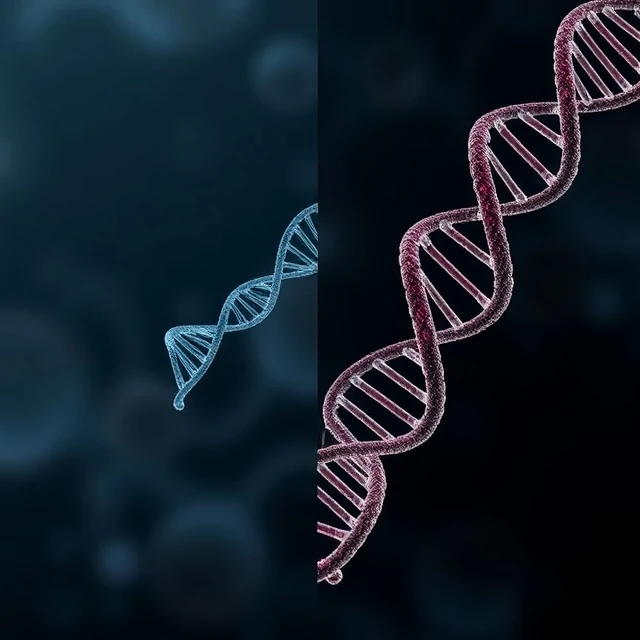
DNA holds the archive; RNA carries out the work. Ribonucleic acid is a versatile nucleic acid that transmits genetic information, catalyzes reactions, and regulates gene expression. Most RNA molecules are single-stranded and contain the base uracil in place of thymine.
Messenger RNA copies the coding sequence of a gene. Transfer RNA delivers amino acids. Ribosomal RNA forms the core of the ribosome. In addition, a growing list of non-coding RNAs controls splicing, chromatin state, and translation. RNA can fold into complex three-dimensional shapes that give it catalytic power.
Some viruses use RNA as their genetic material. Laboratory techniques that reverse-transcribe RNA into DNA or sequence RNA directly have become central to modern biology. The molecule’s chemical instability compared with DNA makes it well suited for transient cellular messages.
- Nucleic acid involved in gene expression
- Usually single-stranded and contains uracil
- Includes mRNA, tRNA, rRNA, and regulatory RNAs
- Can fold into functional three-dimensional structures
Comments
No comments yet. Be the first to share a thought.
Leave a comment