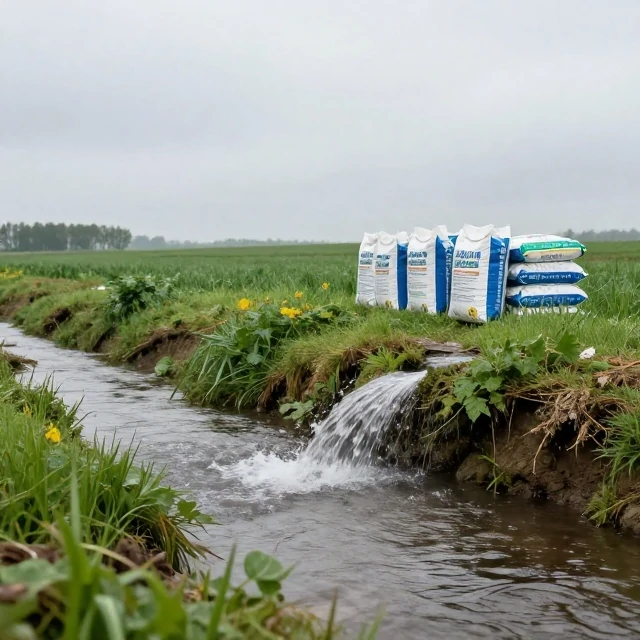
Nonpoint source pollution comes from everywhere and nowhere in particular. Rainwater and snowmelt wash over fields, streets, lawns, and construction sites, picking up fertilizers, oil, pesticides, and sediment. That mix flows into streams, lakes, and groundwater without passing through a pipe or a treatment plant.
The term gained traction in the 1970s as regulators realized that controlling factory pipes and sewage outfalls was not enough. Rivers were still degraded. The pollution was diffuse, carried by runoff from millions of small sources. Agriculture is the largest contributor in many watersheds, followed by urban runoff and atmospheric deposition.
Common sources and solutions
- Fertilizer and manure from farm fields.
- Oil and chemicals from parking lots and roads.
- Sediment from construction and logging sites.
- Lawn chemicals from suburban neighborhoods.
- Solutions include buffer strips, rain gardens, cover crops, and street sweeping.
Nonpoint source pollution is hard to regulate because there is no single smokestack to cite. The Clean Water Act focuses on point sources, leaving nonpoint pollution to state and local programs. Voluntary practices, cost-share programs, and education campaigns do much of the work. The challenge is scale. Millions of small decisions, what to plant, where to park, when to fertilize, add up to the water quality of an entire region. It is a problem that everyone contributes to and everyone can help solve.
Comments
No comments yet. Be the first to share a thought.
Leave a comment