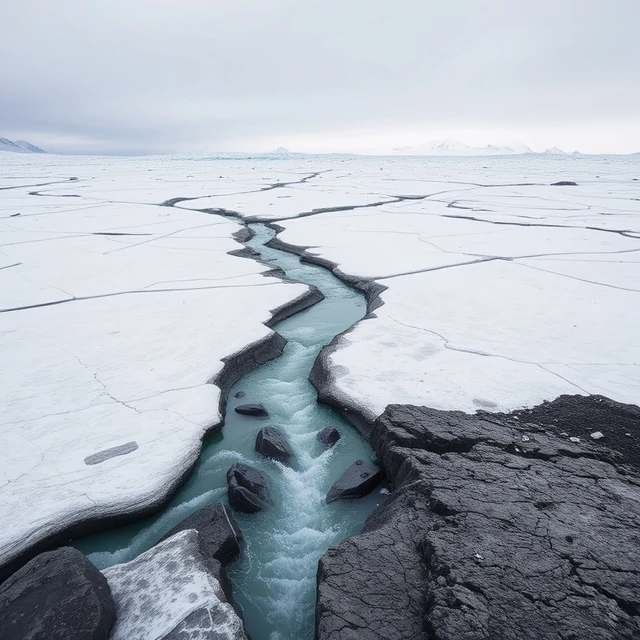
An ice cap is a dome-shaped mass of ice that covers a land area. It is smaller than an ice sheet. Ice caps spread outward from a central high point, burying the terrain beneath. They form in polar and high-altitude regions where snow accumulates year-round and does not fully melt in summer.
Ice caps move. Gravity pulls the ice outward, and the weight of overlying snow compresses the layers below. The ice flows slowly, a few meters per year, carving the landscape as it goes. Meltwater at the edges feeds rivers and streams. Some ice caps sit on volcanic rock and can trigger eruptions when the pressure above them changes.
Most ice caps are shrinking. Warming temperatures melt more snow in summer than winter adds. Iceland's Vatnajökull, one of Europe's largest, is losing mass. The Quelccaya ice cap in Peru has retreated dramatically. The loss affects water supplies, sea levels, and local ecosystems. Ice caps are sensitive indicators of climate change.
Key features
- Dome shape
- Flows outward from center
- Smaller than ice sheets
- Sensitive to temperature
- Feeds meltwater rivers
Comments
No comments yet. Be the first to share a thought.
Leave a comment