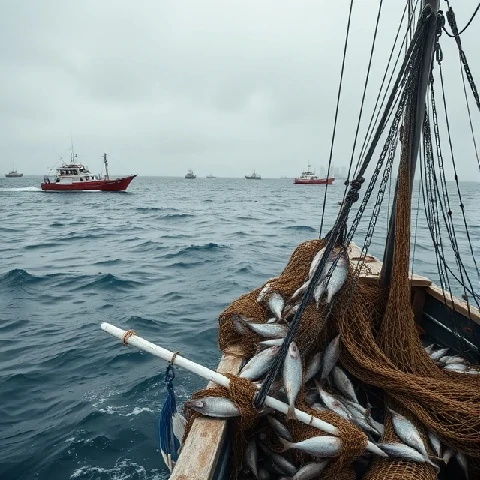
A common resource is something that everyone can use, but one person's use reduces what is available for others. Fish in the ocean, groundwater, and public grazing land are classic examples. They are rivalrous — if I catch a fish, you cannot — but non-excludable — it is hard to stop me from trying.
This combination leads to overuse. Each fisherman benefits from catching more, while the cost of depletion is shared by everyone. The result is the tragedy of the commons. Garrett Hardin popularized the idea in 1968, though Elinor Ostrom later showed that communities can manage common resources successfully with the right rules and trust.
Solutions include quotas, permits, privatization, and community governance. No single approach works everywhere. The key is aligning individual incentives with the long-term health of the resource. Without that, the resource gets depleted, and everyone loses.
Examples
- Ocean fisheries
- Groundwater aquifers
- Public grazing land
- Air quality (a global common)
- Roads and public spaces
Comments
No comments yet. Be the first to share a thought.
Leave a comment