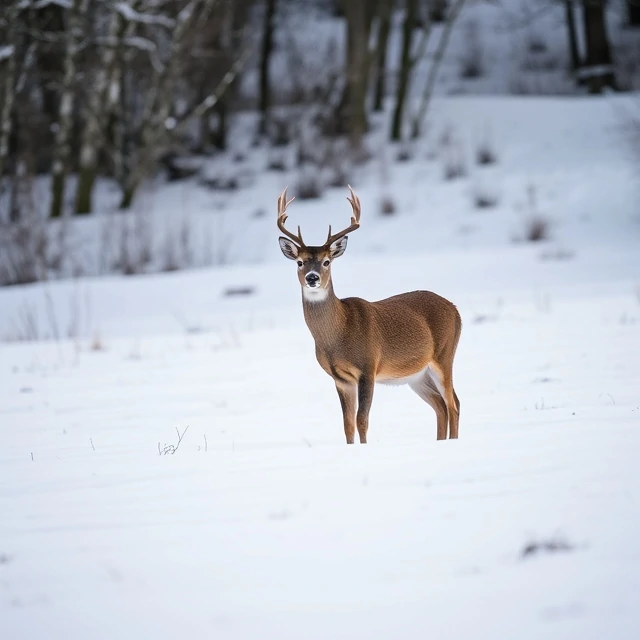
In a garden, plants grow until they run out of water, light, or space. Whichever runs out first is the limiting factor. The concept is central to ecology. It describes the resource or condition that restricts population growth. Without limits, populations would grow exponentially forever. In practice, something always runs short: food, nesting sites, minerals, or the ability to tolerate cold, drought, or disease.
Justus von Liebig proposed the law of the minimum in the 19th century, arguing that growth is determined not by total resources but by the scarcest one. A crop field with plenty of nitrogen and phosphorus but no water will fail. Adding more nitrogen does nothing. The limiting factor is water. The principle applies to animals too. A deer population might be limited by winter forage in one area and by predators in another. As conditions change, the limiting factor shifts. Managing ecosystems means understanding which factor matters most at a given time.
Common limiting factors
- Food and water availability.
- Space and shelter.
- Predators and disease.
- Temperature and other climate conditions.
Identifying the limiting factor is not always easy. It requires observation and often experiments. But without it, efforts to help a population can miss the mark entirely.
Comments
No comments yet. Be the first to share a thought.
Leave a comment