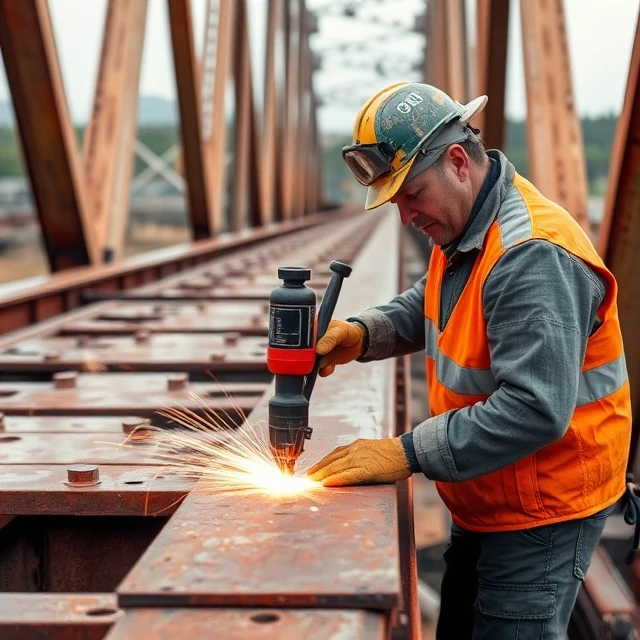
Riveting joins metal plates with permanent metal pins called rivets. A rivet is a cylindrical shaft with a head. It is inserted through holes in the plates. The tail is then deformed, or bucked, to create a second head. The rivet clamps the plates together. It cannot be removed without destroying it. Riveting was the standard method for joining steel in the 19th and 20th centuries. It built ships, bridges, and skyscrapers. It has been largely replaced by welding and bolting. But it is still used in aircraft and some structural applications.
Riveting is a skilled trade. The riveter heats the rivet, inserts it, and bucks the tail with a pneumatic hammer. The work is loud, hot, and physical. The rivet must be the right size and the right material. The holes must be aligned and the right diameter. The rivet must fill the hole completely. A loose rivet can fail. A cracked rivet can propagate. The quality of the riveting determines the strength of the joint. In aircraft, riveting is still the primary method. Aluminum rivets are used because aluminum cannot be easily welded. The rivets are inspected with ultrasound and X-rays.
Riveting has advantages. It is strong, reliable, and permanent. It does not require electricity. It can be done in the field. It can join dissimilar metals. It does not distort the plates as much as welding. It also has disadvantages. It is labor-intensive. It requires access to both sides of the joint. It cannot be easily disassembled. The rivet holes weaken the plates. The rivets add weight. Riveting is a traditional technique. It is still relevant. It is a reminder that not everything needs to be welded.
Comments
No comments yet. Be the first to share a thought.
Leave a comment