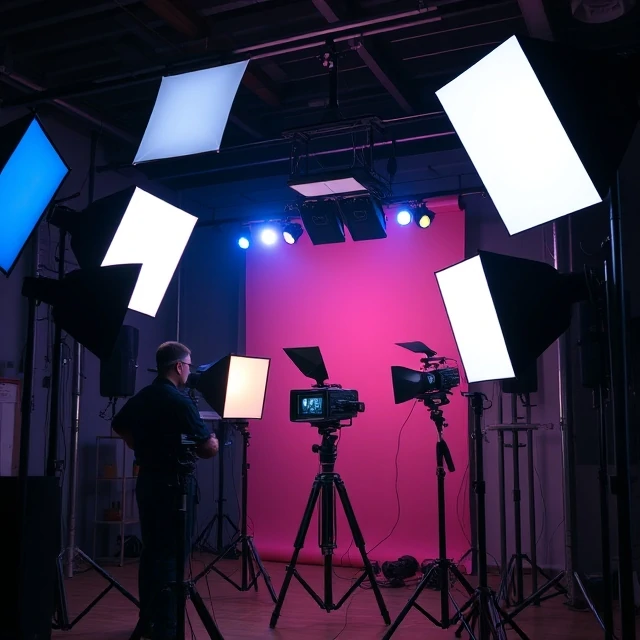
Lighting shapes everything in a film. It determines what the audience sees and how they feel about it. A face lit from below looks sinister. A face lit from above looks angelic. A room lit with warm tungsten feels cozy. A room lit with cool fluorescent feels clinical. Lighting is not just about visibility. It is about mood, tone, and meaning. It is one of the most powerful tools in cinema.
Lighting has several properties. Intensity determines how bright the light is. Color determines its warmth or coolness. Direction determines where the shadows fall. Quality determines whether the light is hard or soft. Hard light creates sharp, defined shadows. Soft light creates gradual, diffused shadows. The choice of each property affects the image. A cinematographer combines multiple lights to create a controlled, dimensional look. The three-point setup, with key, fill, and backlight, is a standard starting point. But great cinematographers go far beyond it.
Lighting also has a practical dimension. It must be consistent across shots. It must be motivated by the scene. If a lamp is visible in the frame, the light it casts must match its position and color. If the scene is set at night, the lighting must look like night, even if it was shot during the day. The craft is technical and creative. It requires an understanding of physics and an eye for composition. The best lighting is invisible. The audience just feels the mood.
Comments
No comments yet. Be the first to share a thought.
Leave a comment