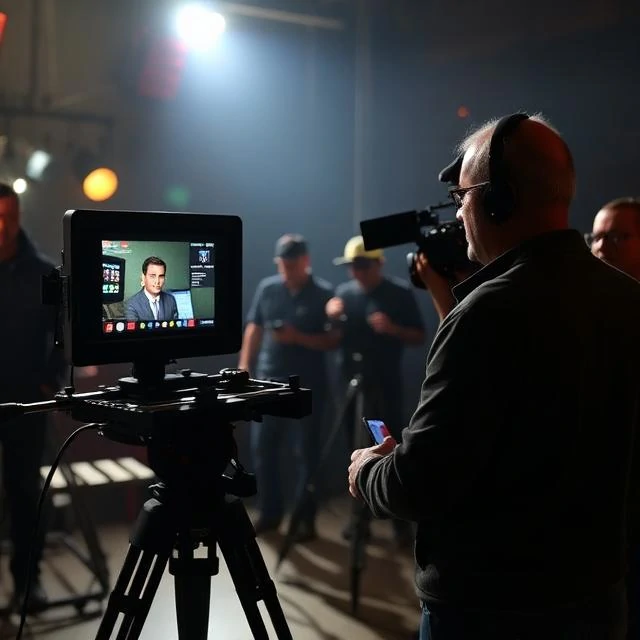
The director creatively leads the making of a film. They interpret the script, guide the performances, and shape the visual and aural style. They work with the cinematographer, the editor, the production designer, and the composer. They are the captain of the ship. The final film is often attributed to them, for better or worse. A director's vision can make a film transcendent or incoherent.
The role varies by director and by project. Some directors are writers who develop their own material. Some are hired to execute someone else's script. Some are highly collaborative, encouraging input from actors and crew. Some are autocratic, controlling every detail. Some are visually oriented, focusing on the image. Some are performance-oriented, focusing on the actors. Some are both. There is no single model.
The director's work begins before the shoot and continues after it. They prepare the script, cast the actors, scout locations, and plan the shots. During the shoot, they work with the actors, the camera crew, and the crew. In post-production, they work with the editor, the sound designer, and the composer. They are involved in marketing and promotion. The job is demanding and all-consuming.
Some directors are auteurs, with a distinct style and thematic preoccupations. Alfred Hitchcock, Akira Kurosawa, Martin Scorsese, and Greta Gerwig are examples. Others are craftspeople, skilled at executing a vision that is not entirely their own. Both are essential to the industry.
Comments
No comments yet. Be the first to share a thought.
Leave a comment