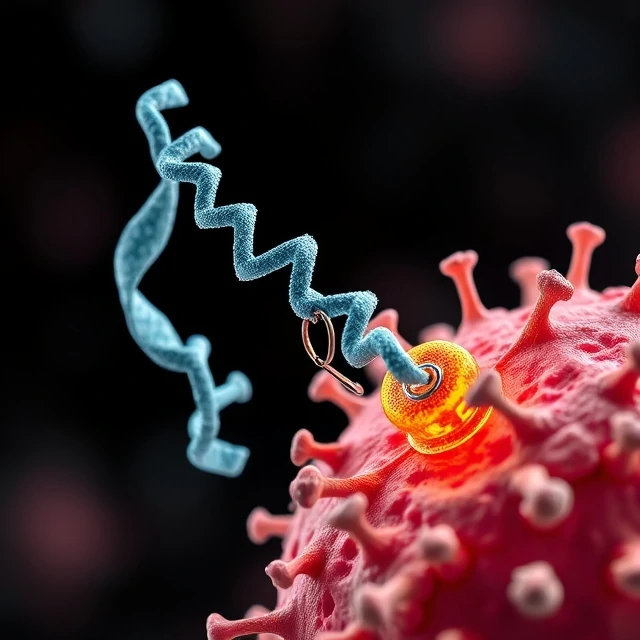
In 1975, Georges Köhler and César Milstein developed a technique to produce identical antibodies from a single cell line. They fused an antibody-producing B cell with a myeloma cell, creating a hybridoma that could divide indefinitely and produce a single antibody. Monoclonal antibodies were born. The discovery won the Nobel Prize in 1984.
A monoclonal antibody binds to one specific target, called an epitope. That specificity makes them powerful drugs. They can block a protein that drives cancer, flag a cancer cell for destruction by the immune system, or neutralize a virus. They can also deliver a drug payload directly to a target cell. The first therapeutic monoclonal antibody, muromonab, was approved in 1986. Since then, hundreds have been approved for cancer, autoimmune diseases, infectious diseases, and migraine.
Monoclonal antibodies are produced in mammalian cell cultures, usually Chinese hamster ovary cells. The process is expensive and complex. The antibodies must be purified from the culture broth and tested for potency, purity, and safety. They are usually given by intravenous infusion or subcutaneous injection because they would be digested if swallowed.
The names of monoclonal antibodies reveal their origin. Human antibodies end in -umab. Humanized antibodies end in -zumab. Chimeric antibodies end in -ximab. The suffix is not just a label. It tells you how much of the molecule is human and how likely it is to trigger an immune response.
Comments
No comments yet. Be the first to share a thought.
Leave a comment