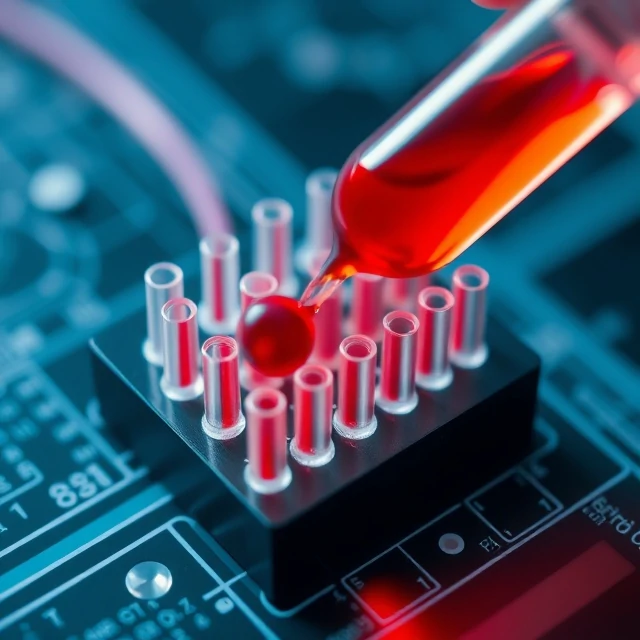
A laboratory on a chip the size of a credit card. That is the ambition of lab-on-a-chip technology. It miniaturizes laboratory functions onto a small device, integrating multiple steps like sample preparation, mixing, separation, and detection. The chip uses microfluidics to manipulate tiny volumes of liquid through channels thinner than a human hair.
The advantages are significant. Small volumes mean less reagent, lower cost, and faster reactions. The devices are portable, so testing can happen at the point of care instead of a central lab. They can run multiple tests in parallel. They can detect low concentrations of analytes. They are disposable, reducing contamination risk.
Lab-on-a-chip devices are used for medical diagnostics, like rapid blood tests and infectious disease detection. They are used for DNA analysis, including sequencing and PCR. They are used in drug discovery for high-throughput screening. They are used in environmental monitoring for detecting pollutants. The technology is versatile.
The challenges are manufacturing and integration. Building a chip that performs all the steps reliably is hard. Scaling up production while keeping costs low is harder. But the field is advancing, and the vision of a complete lab on a chip is getting closer.
Comments
No comments yet. Be the first to share a thought.
Leave a comment