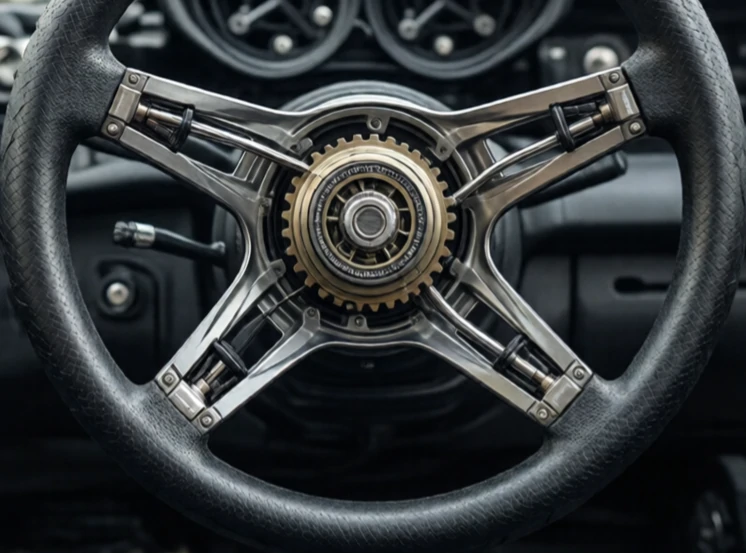
Steering converts a driver's hand movements into changes in vehicle direction. The wheel turns a shaft, the shaft turns a gear, and the gear moves the front wheels left or right. Modern systems add power assistance, but the fundamental geometry has not changed in a century.
The most common layout is rack-and-pinion. A pinion gear on the steering shaft meshes with a toothed rack. Turning the wheel slides the rack sideways, which pushes or pulls the tie rods connected to the steering arms. Recirculating-ball steering, used on older trucks and some large cars, handles heavier loads but feels less precise.
Key steering components
- Steering wheel and column.
- Rack and pinion or steering gearbox.
- Tie rods and tie rod ends.
- Steering knuckles and ball joints.
- Power steering pump or electric motor.
Worn steering parts cause play in the wheel, vague on-center feel, and uneven tire wear. A car that wanders or shimmies needs an inspection. Alignment angles, toe, camber, and caster, determine how the tires meet the road and how the car tracks. Get them wrong and the steering fights the driver on every straightaway.
Comments (2)
Leave a comment