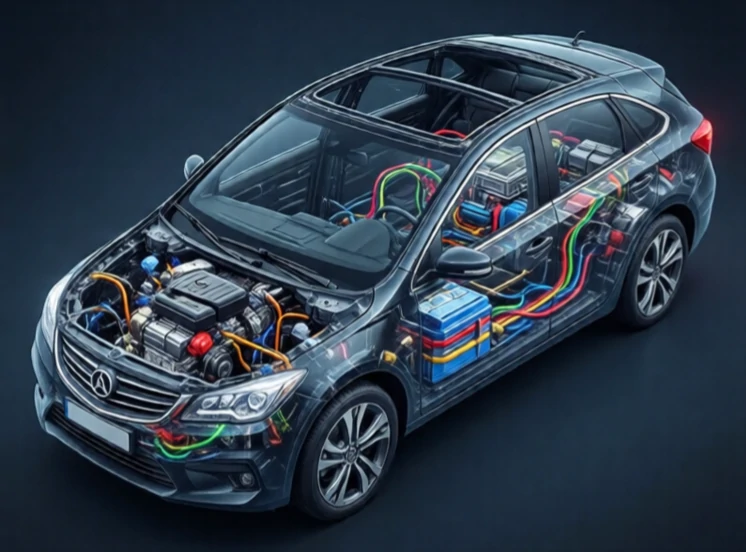
A hybrid vehicle pairs a gasoline or diesel engine with an electric motor and a battery. The two power sources work together, and the car decides moment by moment which one to use. That decision is where the fuel savings come from.
The first mass-market hybrid, the Toyota Prius, arrived in Japan in 1997. It used a clever power-split device instead of a traditional gearbox, letting the engine run at efficient speeds while the electric motor filled in the gaps. Honda's Insight followed in 1999 with a simpler parallel setup.
How hybrids save fuel
- Regenerative braking captures energy that would otherwise become heat.
- The engine shuts off when the car is stopped or coasting.
- The electric motor helps during acceleration, letting a smaller engine do the work.
- Low-speed driving can run on electricity alone for short distances.
Not all hybrids are equal. Mild hybrids only assist the engine. Full hybrids can drive on electric power alone at low speeds. Plug-in hybrids add a larger battery and a charging port. The line between hybrid and electric blurs a little more each model year.
Comments
No comments yet. Be the first to share a thought.
Leave a comment