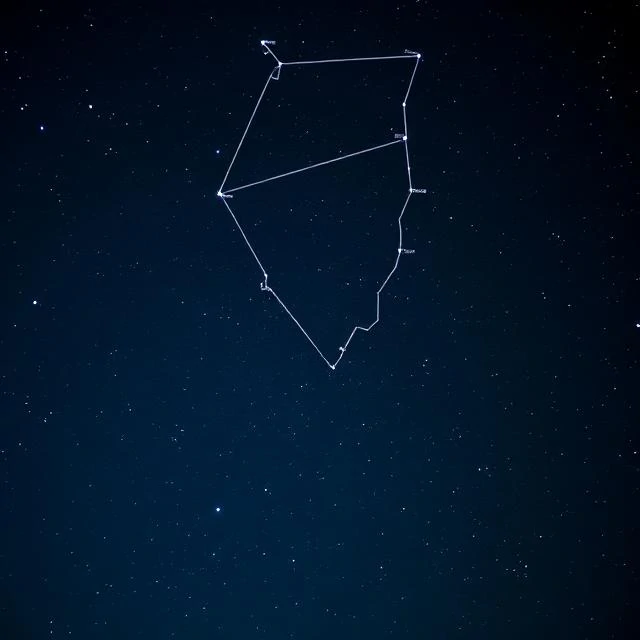
Constellations are patterns of stars that people have recognized for thousands of years. They are not physical groupings. The stars in a constellation may be dozens or hundreds of light-years apart. They just happen to line up from our vantage point on Earth. The pattern is a human invention, but it is a useful one.
Today, the International Astronomical Union recognizes 88 constellations. Each one is a defined region of the sky, not just a stick figure. When astronomers say a galaxy is in the constellation Andromeda, they mean it lies within that region's boundaries. The constellations cover the entire sky like a jigsaw puzzle.
Many constellations come from ancient Greek and Babylonian astronomy. Others were added by European astronomers in the 17th and 18th centuries, often naming them after scientific instruments like Telescopium and Microscopium. The naming is not consistent, and some constellations are brighter than others.
Constellations are not just for astronomers. They are part of human culture. The same stars have been named and interpreted by cultures around the world, and those stories are as important as the science.
Comments
No comments yet. Be the first to share a thought.
Leave a comment