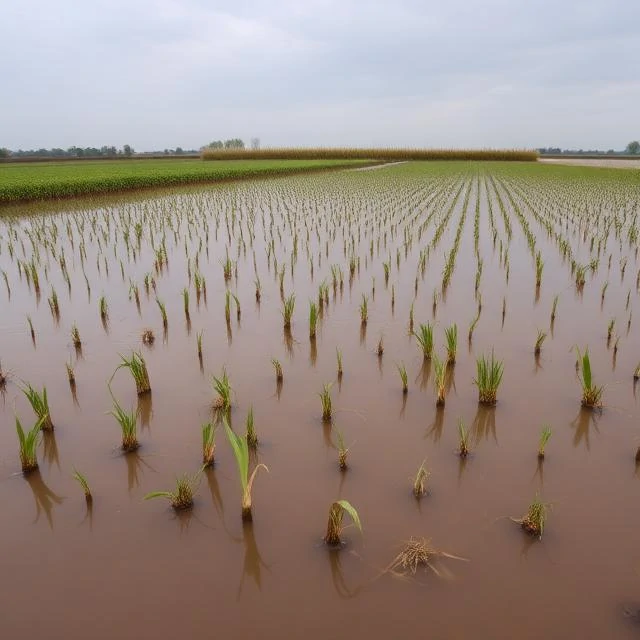
When a river climbs over its banks, or rain falls faster than the ground can absorb it, the result is a flood. For farmers downstream, that means drowned crops, washed-out topsoil, and sometimes weeks of lost work.
Flooding is not always a disaster. The Nile, the Tigris, and the Indus all supported early farming civilisations precisely because they flooded on a predictable schedule, leaving behind fresh silt. Egyptian farmers planted as the water receded. That rhythm held for thousands of years, until dams and levees took over the job of controlling the flow.
Why floods hurt modern farms
- Roots suffocate within days when soil is waterlogged
- Fast-moving water strips the nutrient-rich top layer
- Sewage, chemicals, and pathogens spread onto produce
- Fences, barns, and stored feed can be destroyed
Plant breeders have developed rice and some cereals that tolerate brief submergence, but most crops cannot handle more than a few days underwater. Farmers in floodplains increasingly rely on raised beds, drainage ditches, and flood insurance to manage the risk.
Comments
No comments yet. Be the first to share a thought.
Leave a comment