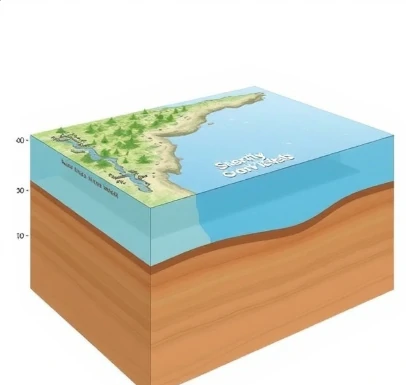
Surrounding the continents is a shallow, gently sloping platform that extends from the shoreline to the shelf break, usually at depths of 100 to 200 meters. This continental shelf is the submerged margin of the continental crust and the part of the ocean most directly influenced by terrestrial processes.
Shelves vary widely in width—from a few kilometers along tectonically active coasts to several hundred kilometers off passive margins. They receive sediments from rivers, support highly productive ecosystems, and host most of the world’s marine fisheries and hydrocarbon resources. Light reaches the seafloor across much of the shelf, allowing benthic photosynthesis and diverse habitats such as seagrass beds, kelp forests, and coral reefs.
Because of their accessibility and resource value, continental shelves are also the most heavily impacted ocean regions. Coastal development, fishing, dredging, and pollution all concentrate here. Management of shelf ecosystems requires balancing extraction with the maintenance of biodiversity and coastal protection.
- Shallow submerged edge of a continent
- Typically less than 200 m deep
- Highly productive and resource-rich
- Most impacted part of the global ocean
Comments
No comments yet. Be the first to share a thought.
Leave a comment