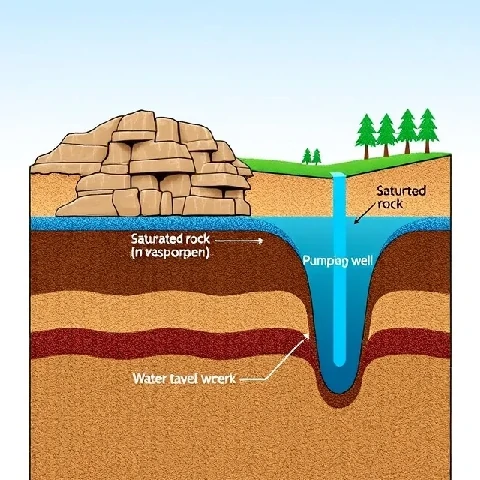
Not all underground water is equally accessible. An aquifer is a body of rock or sediment that both stores and transmits usable quantities of groundwater. Sandstone, limestone, and gravel deposits often make good aquifers because they combine porosity with permeability.
Water enters an aquifer at recharge areas and moves slowly under gravity and pressure toward discharge points such as springs or wells. Confined aquifers lie between impermeable layers and may be under artesian pressure. Unconfined aquifers have a free water table open to the atmosphere.
Over-pumping lowers water levels and can cause land subsidence or saltwater intrusion near coasts. Hydrogeologists map aquifers, measure their properties, and model sustainable yields. Many cities and farms depend entirely on aquifer water, making careful management essential.
- Underground layer that stores and transmits water
- Requires both porosity and permeability
- May be confined or unconfined
- Critical source of freshwater for human use
Comments
No comments yet. Be the first to share a thought.
Leave a comment