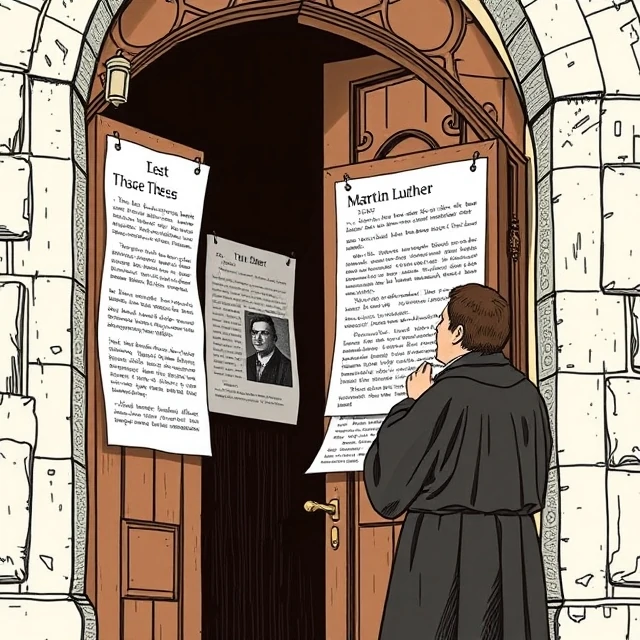
In 1517 a German Augustinian friar posted a set of academic theses about indulgences. Within a decade the dispute had become a continental rupture. The Reformation is the name given to that sixteenth-century upheaval that permanently divided Western Christianity into Protestant and Catholic streams.
Martin Luther’s central insight was justification by faith alone. Good works and sacramental observance, he argued, could not earn standing before God; only trust in the promise of Christ could. Scripture, not the teaching office of the Church, was the final authority. Other reformers—Zwingli in Zurich, Calvin in Geneva, the Anabaptists in various places—pushed the logic further or in different directions. Vernacular Bibles, congregational singing, and simplified worship followed. Political rulers quickly saw both opportunity and danger; the result was a patchwork of established churches and, in places, fierce religious war.
The Catholic response, often called the Counter-Reformation, clarified doctrine at the Council of Trent, reformed clerical education, and launched new religious orders. By the end of the century the map of Europe had been redrawn along confessional lines. The long-term effects reached far beyond the church: literacy rose with Bible reading, notions of individual conscience gained new weight, and the idea of a single Christian commonwealth faded.
What began as a debate over salvation became a reshaping of European culture itself.
Comments
No comments yet. Be the first to share a thought.
Leave a comment