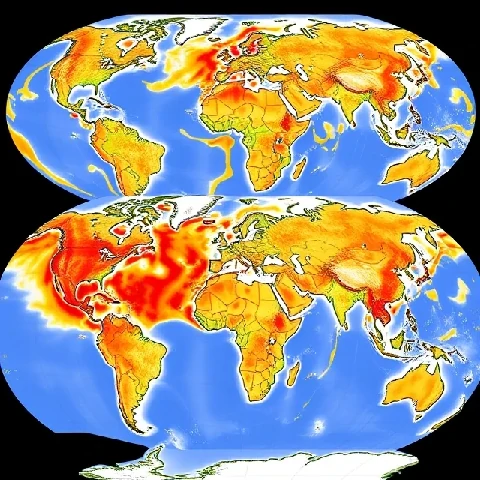
Matching coastlines and fossil distributions once puzzled geologists. Continental drift is the idea that continents have moved slowly across Earth’s surface through geologic time. Alfred Wegener assembled the key evidence in the early twentieth century, though a mechanism was lacking until plate tectonics supplied it.
Fit of the continents, identical rock sequences on opposite shores, and fossils of the same species found across now-separated lands all supported the concept. Glossopteris flora and Mesosaurus remains appear in South America, Africa, Antarctica, and Australia, indicating these lands were once joined.
Today the motion is understood as a consequence of plate tectonics. Continents ride on lithospheric plates that move a few centimeters per year. Paleomagnetic data and GPS measurements confirm the ongoing drift. The theory transformed geology by linking surface features to deep-Earth processes.
- Gradual movement of continents over time
- Supported by fossil, rock, and coastline evidence
- Explained by plate tectonic theory
- Continues at measurable rates today
Comments
No comments yet. Be the first to share a thought.
Leave a comment