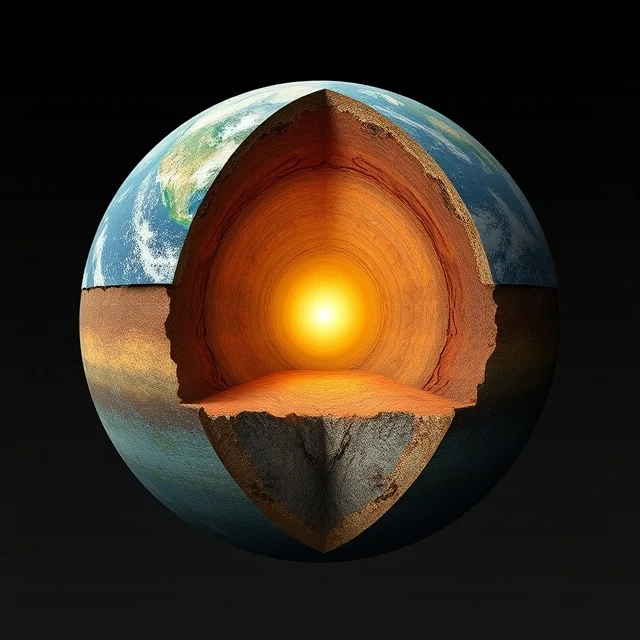
Beneath the rigid plates lies a layer that slowly yields. The asthenosphere is the semi-fluid portion of the upper mantle on which the lithosphere rests and moves. Temperatures and pressures there allow rock to deform by ductile flow over geologic time.
Seismic waves slow as they pass through the asthenosphere, evidence of its partially molten or near-melting state. Convection within this layer helps drive plate motion. The boundary with the overlying lithosphere is gradual rather than sharp and varies in depth.
Understanding the asthenosphere is central to plate tectonic theory. Its low viscosity permits the horizontal movement of tectonic plates and the isostatic adjustment of the crust after loading or unloading by ice sheets or erosion. Without this weak layer, the rigid outer shell could not recycle as it does.
- Ductile layer of the upper mantle
- Allows lithospheric plates to move
- Characterized by low seismic velocities
- Key to mantle convection and plate tectonics
Comments
No comments yet. Be the first to share a thought.
Leave a comment