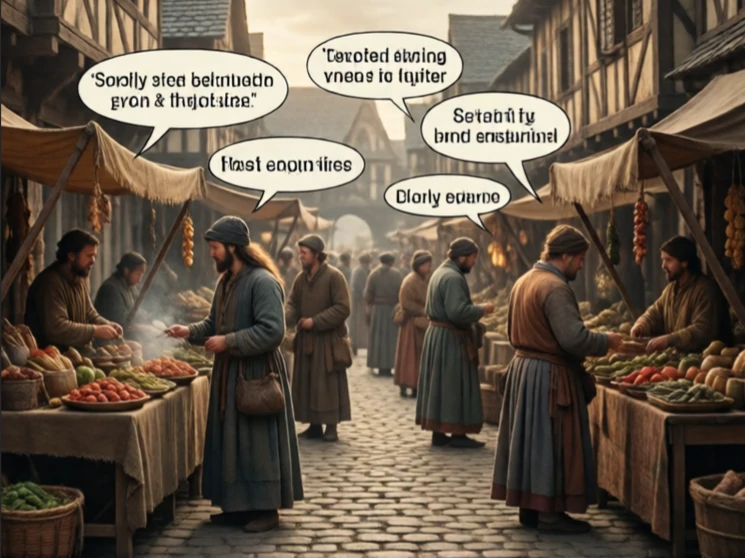
Vernacular is the language or dialect spoken by the ordinary people of a country or region. It is the everyday speech of a community, as opposed to a formal or literary language. Latin was the learned language of medieval Europe. The vernacular was what people spoke at home.
The rise of the vernacular was a turning point in literature. Dante wrote The Divine Comedy in Italian, not Latin. Chaucer wrote in Middle English. Luther translated the Bible into German. These choices made literature and religion accessible to people who had never learned Latin. Vernacular writing is often more direct and vivid. It captures the rhythms of real speech. But it can also be local and temporary. A vernacular word or phrase may not be understood by outsiders. In modern usage, vernacular can refer to any specialized language of a group, like the vernacular of jazz musicians or internet slang.
Historical examples
- Dante’s Divine Comedy in Italian
- Chaucer’s Canterbury Tales in Middle English
- Luther’s Bible in German
- Mark Twain’s use of American vernacular
Comments
No comments yet. Be the first to share a thought.
Leave a comment