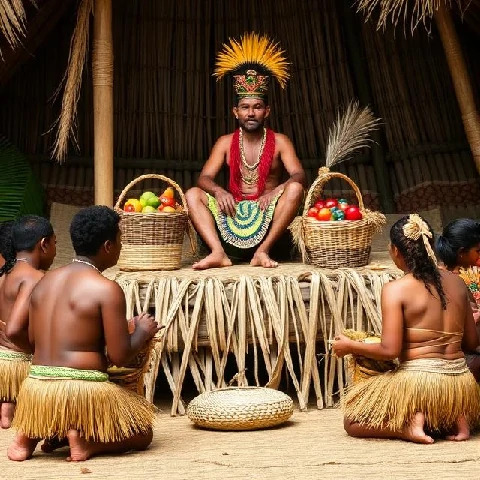
A chiefdom is a ranked society led by a chief whose authority is inherited. It sits between the small egalitarian band and the fully stratified state. Chiefdoms appeared in many parts of the world: Polynesia, the Pacific Northwest, West Africa, and pre-Columbian North America. Population sizes range from a few thousand to tens of thousands, often spread across several villages under one leader.
Rank matters in a chiefdom. People are not equal; some lineages hold higher status than others. The chief collects tribute, redistributes goods, and settles disputes. He or she may also organize labor for public works like irrigation canals, temples, or burial mounds. Power is real but not absolute. Chiefs who fail to redistribute generously or who rule harshly can lose followers.
Common features
- Hereditary rank and a chiefly lineage.
- Redistribution of goods through the chief.
- Ceremonial centers with mounds or monuments.
- Craft specialization and tribute payments.
Chiefdoms are unstable by nature. Some grow into states; others collapse or fragment. Their study helps explain how inequality became entrenched in human societies.
Comments (3)
Leave a comment