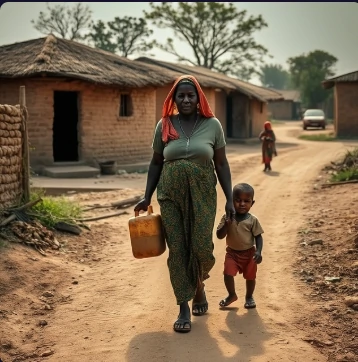
A family of four in rural Malawi spends most of its income on maize flour. No electricity, no running water, no clinic within walking distance. That is absolute poverty: a condition where people lack the basic necessities for survival — food, clean water, shelter, and minimal health care. The threshold is not relative to what neighbors have. It is a fixed line, usually defined by international agencies as living on less than about $2.15 a day.
Sociologists distinguish this from relative poverty, which measures disadvantage against a society's average standard. Absolute poverty is about survival. It shortens lives, limits cognitive development in children, and traps families in cycles that span generations.
Key features
- Measured against a fixed survival threshold, not societal averages
- Concentrated in low-income countries and regions affected by conflict or drought
- Linked to high child mortality, malnutrition, and limited schooling
- Targeted by international development goals and cash transfer programs
Governments and NGOs track it through household surveys. The number of people in absolute poverty has fallen sharply since 1990, though progress stalled during the COVID-19 pandemic.
Comments
No comments yet. Be the first to share a thought.
Leave a comment